

The Swarajya Chronicles: Book 3, Chapter 26
Current Focus: The Boy and the Vow (1648–1659)
Progress: 26 / 100 Chapters Completed….
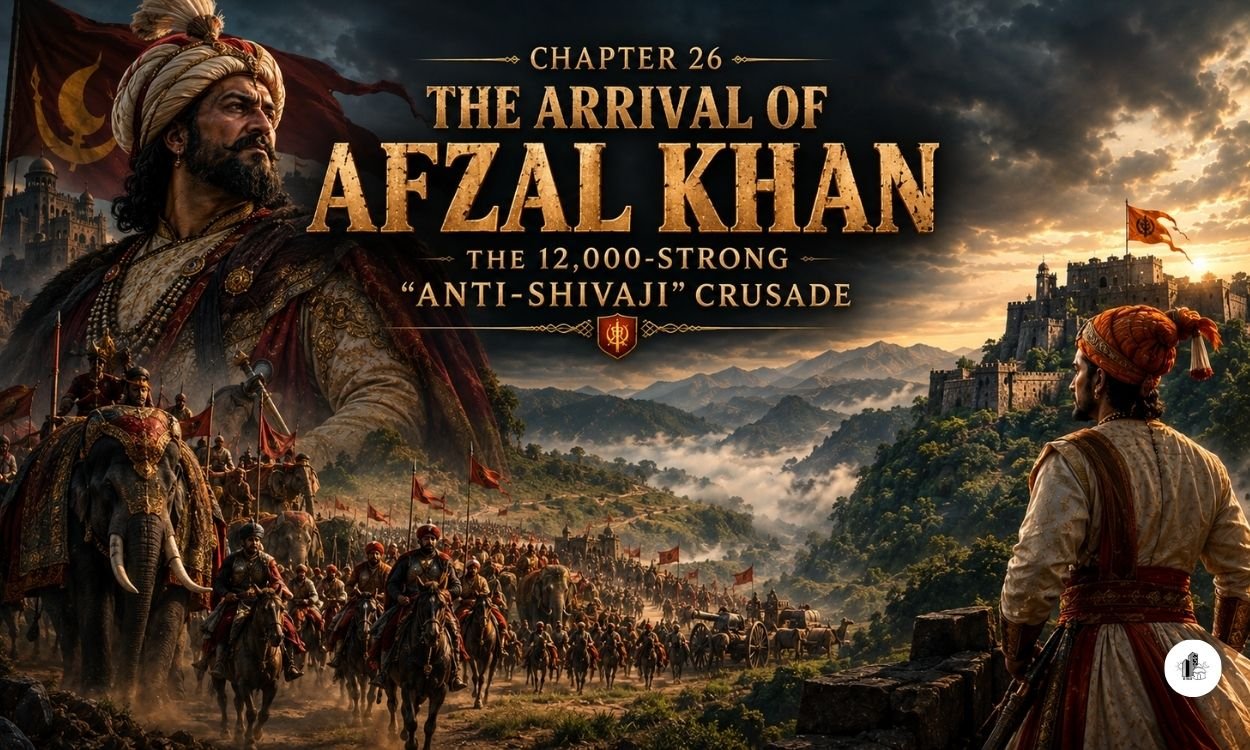
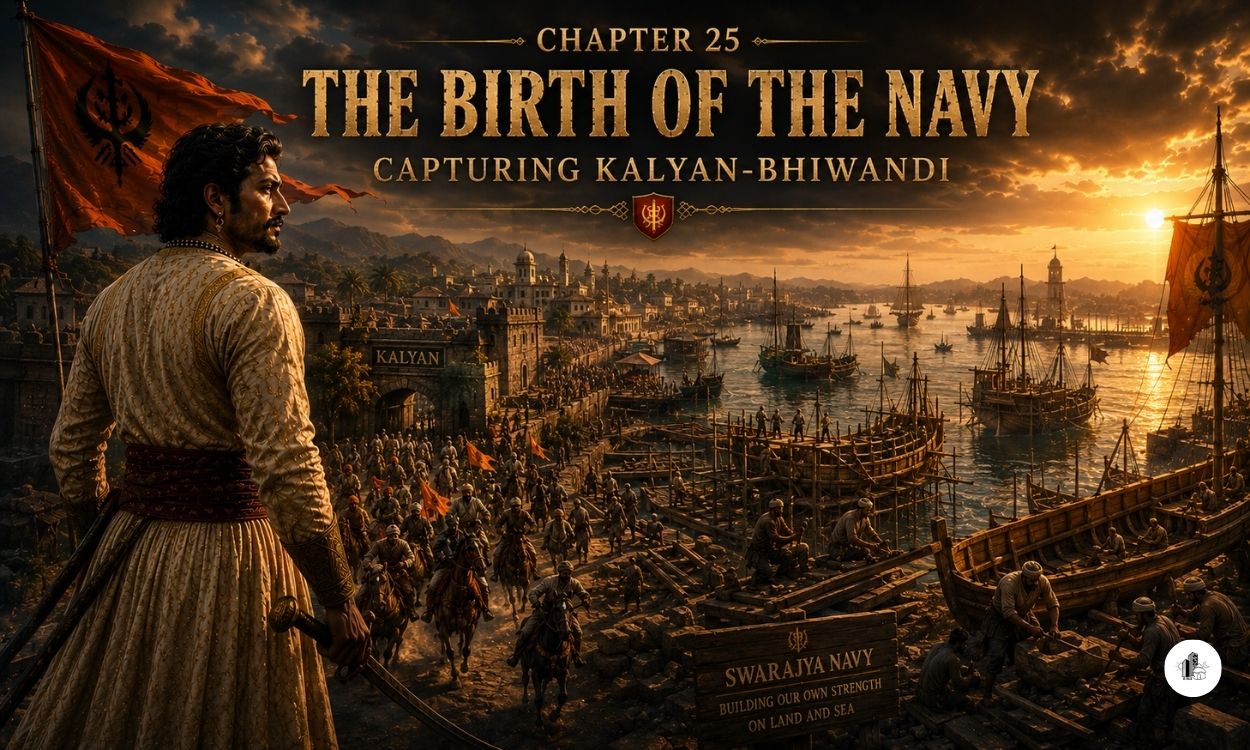
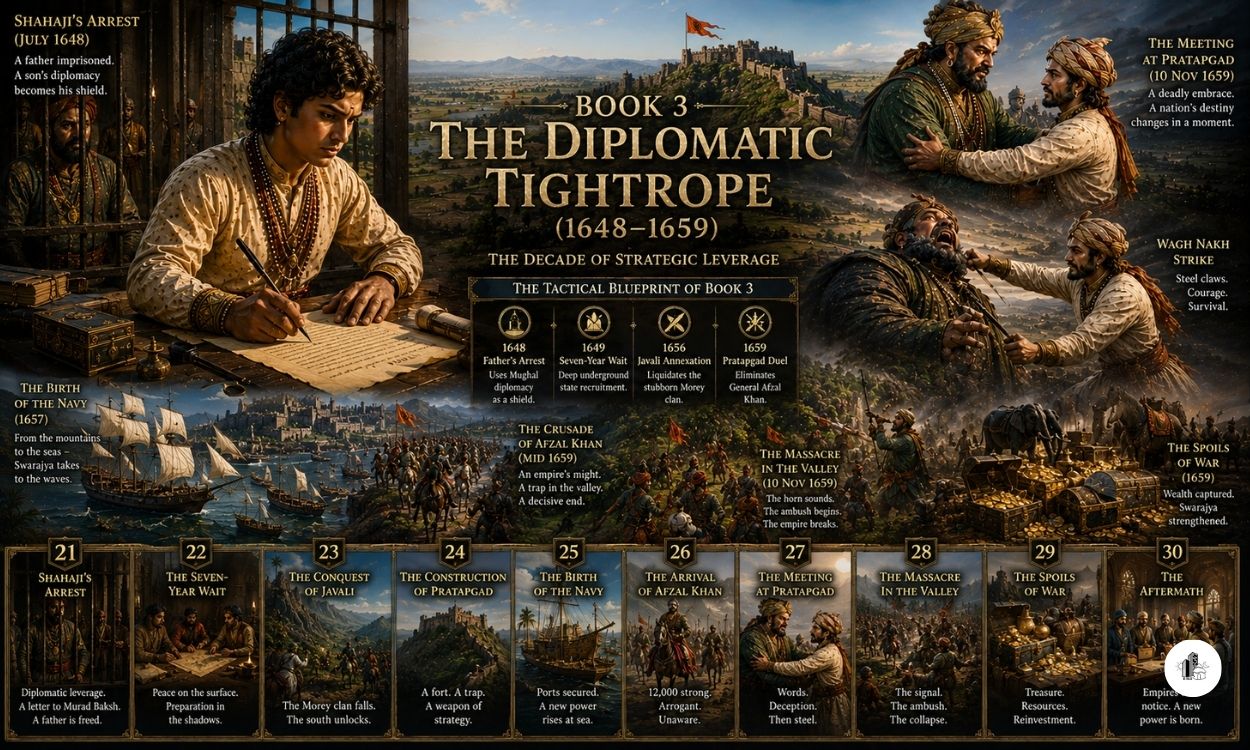
In May 1657, a massive war drum echoed through the court of Bijapur. The Adilshahi Sultanate had reached its limit. A young rebel named Chhatrapati Shivaji Maharaj was capturing royal forts one after another. He took the tax-rich coastal ports of Kalyan and Bhiwandi, and he stopped paying tribute to the central government. The royal court needed a permanent solution. Ali Adil Shah II and the queen regent Badi Begum picked their most lethal general. They appointed Afzal Khan to eliminate the Maratha leader once and for all.
The historic fortifications of the Bijapur Sultanate. Source: mcmorabad / Getty Images
The Giant of Bijapur: Who Was Afzal Khan?
Afzal Khan was not an ordinary military officer. He was a veteran battlefield commander standing over seven feet tall, possessing immense physical strength and years of combat experience. He had previously crushed major rebellions across the southern Carnatic region. Primary sources like the Jedhe Shakavali and the Tarikh-i-Ali detail his brutal reputation and absolute ruthlessness toward political rivals.
More importantly, he had a deep personal history with the Bhosale family. Years earlier, he played a key role in the military campaign that led to the death of Chhatrapati Shivaji Maharaj‘s older brother, Sambhaji Bhosale, near Kanakagiri. For Afzal Khan, this mission was deeply personal. He publicly vowed in court to bring Chhatrapati Shivaji Maharaj back in iron chains.
“Wait, have you read this yet?”
The 12,000-Strong War Machine
The army that marched out of Bijapur in mid-1659 was built for massive open-field destruction. It was an elite joint strike force funded directly by royal tax vaults.
The Heavy Cavalry: 10,000 armored horsemen trained for swift open-field charges.
The Musket & Cannon Units: 1,500 elite matchlock infantry and light field artillery.
The Logistics Fleet: 85 war elephants and thousands of camels carrying gunpowder, tents, and grain.
Contemporary Portuguese factory records from Goa noted this expedition with great interest, describing Afzal Khan‘s force as the best-equipped campaign sent into the Western Ghats in decades. The imperial court believed raw numbers and heavy firepower would terrify the Maratha rebels into immediate surrender.
Psychological Warfare: The Trail of Destruction
Afzal Khan knew he could not defeat Chhatrapati Shivaji Maharaj inside narrow mountain passes because high-altitude warfare favored fast infantry over heavy cavalry. Therefore, he used psychological operations to force the Marathas into the open plains. His army marched directly through the heartland of Maharashtra, targeting famous cultural centers and rich agricultural zones.
His forces damaged major religious sites at Tuljapur and Pandharpur and burned standing crops in local villages. He wanted to provoke Chhatrapati Shivaji Maharaj into an emotional mistake. If the Marathas came down from their hill forts to protect the plains, his 10,000 heavy cavalry would destroy them in hours.
Counter-Strategy: The Mountain Trap
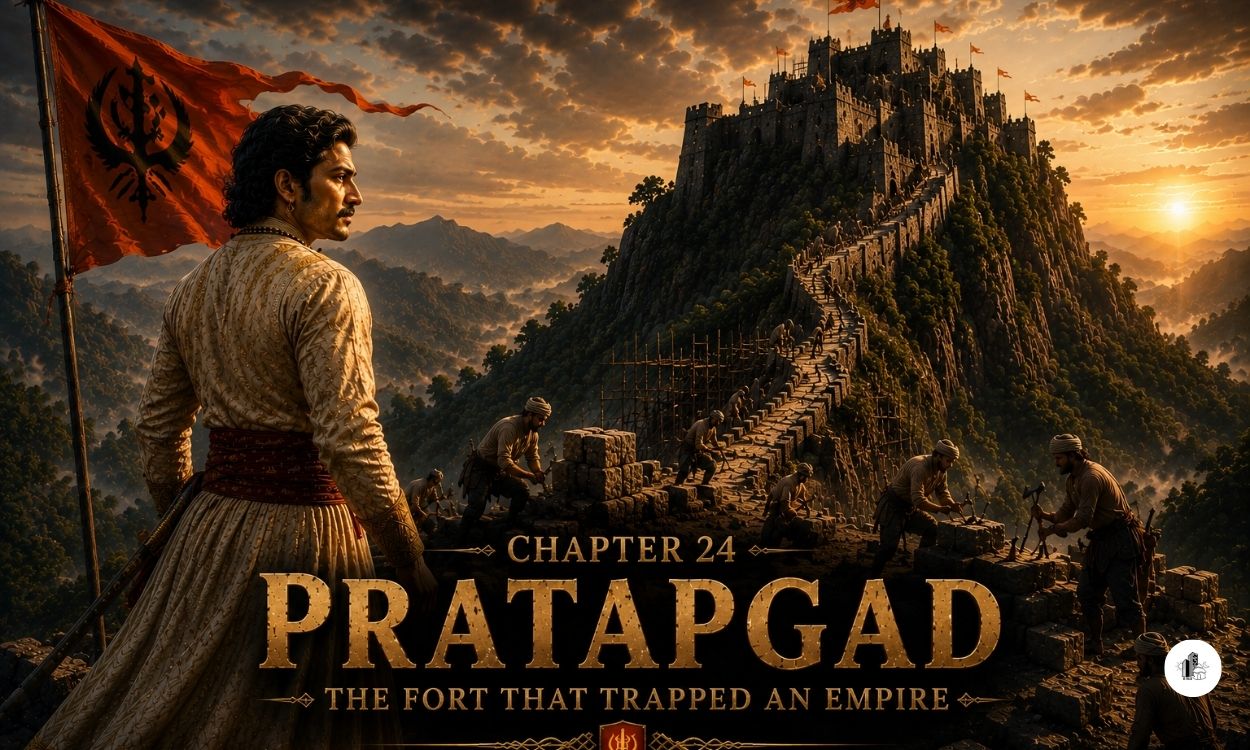
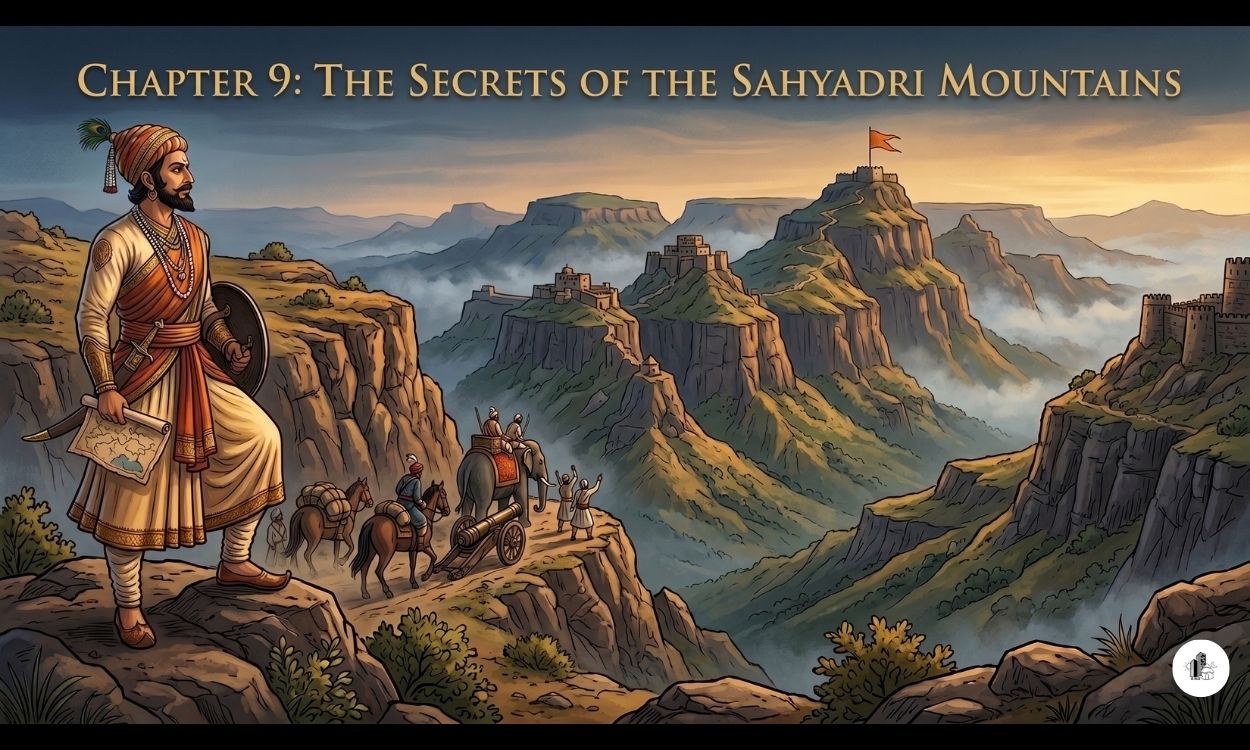
Chhatrapati Shivaji Maharaj refused to take the bait. He understood the mathematical reality of the conflict: meeting Afzal Khan‘s armored cavalry on flat ground meant total destruction. Instead, Chhatrapati Shivaji Maharaj executed a massive strategic retreat. He moved his headquarters from Rajgad deep into the dense jungle fortress of Pratapgad in Jawali.
Pratapgad Fort overlooking the steep Sahyadri mountains. Source: Alfredo Matus / Getty Images
Loving this analysis? Let’s stay connected!
Join our WhatsApp & Telegram Channels: Get the latest movie alerts and box office updates directly on your phone. [WhatsApp] & [Telegram]
Follow us on X (Twitter): For quick threads, daily polls, and viral cinema news. [Click Here]
Join our Quora Space: Participate in deep discussions and share your own theories with fellow movie buffs. [Click Here]
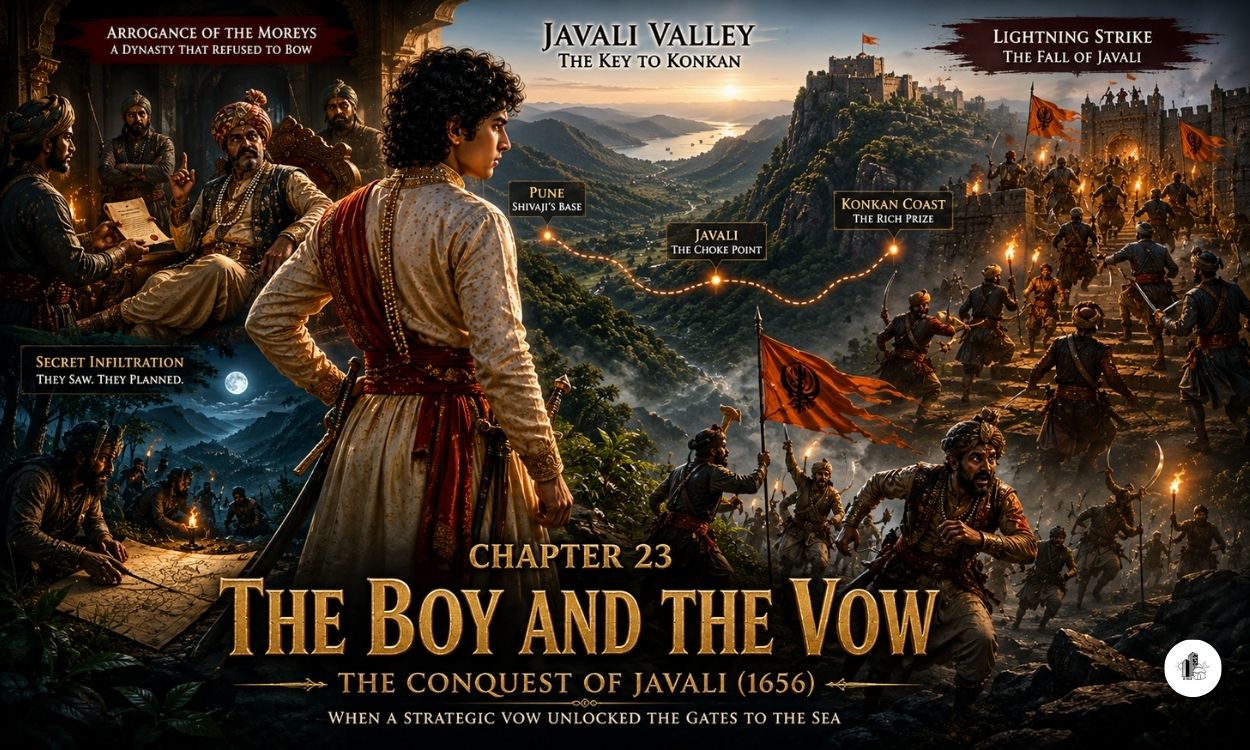
The Jawali valley was a natural green labyrinth where the mountains were steep, the pathways were narrow, and the forests were thick.
| Strategic Factor | Afzal Khan’s Imperial Army | Chhatrapati Shivaji Maharaj’s Maratha Army |
| Primary Strength | 10,000 heavy armored cavalry | High-speed mountain light infantry |
| Ideal Terrain | Flat, open plains of the Deccan | Dense jungle passes of Jawali |
| Supply Chain | Long, exposed bullock-cart caravans | Local mountain forts and hidden grain stores |
| Tactical Goal | Force an open-field pitched battle | Draw enemy into narrow, dense mountain traps |
By moving to Pratapgad, Chhatrapati Shivaji Maharaj reversed the psychological pressure. He forced a heavy imperial army to enter a narrow mountain trap where their horses and cannons were completely useless.
Logistics and the Local Population
While the generals planned their moves, common civilians bore the burden of the invasion. Local farmers stored emergency rations of dry Bhakri flatbread and coarse millet in hidden pits.
Shivaji Maharaj used local administrative records, known as Mahazars, to coordinate local resistance. He instructed village leaders (Patils) to evacuate civilians into high mountain valleys.
When Afzal Khan’s army advanced, they found empty villages and stripped fields. The invaders struggled to find fodder for their 85 war elephants. The long supply lines from Bijapur were constantly attacked by Maratha guerilla units, causing the giant war machine to starve before firing a single major shot.
The Stage Is Set
By late October 1659, the two armies faced a tense stalemate. Afzal Khan was stuck at the base of the dense Jawali forests with a starving army, while Chhatrapati Shivaji Maharaj sat securely inside the stone walls of Pratapgad high above the fog.
Raw force had failed to yield a quick decision. The conflict shifted from open warfare to deadly secret diplomacy. Both commanders realized that the fate of the Deccan would be decided not by thousands of troops, but by a face-to-face personal meeting.
What Do You Think?
Do you think Chhatrapati Shivaji Maharaj was right to ignore the destruction of the plains to save his army? How would Indian history change if the Maratha army had given in to emotion and fought Afzal Khan in the open plains?
Let us know your thoughts in the comments section below!





Leave a Reply