

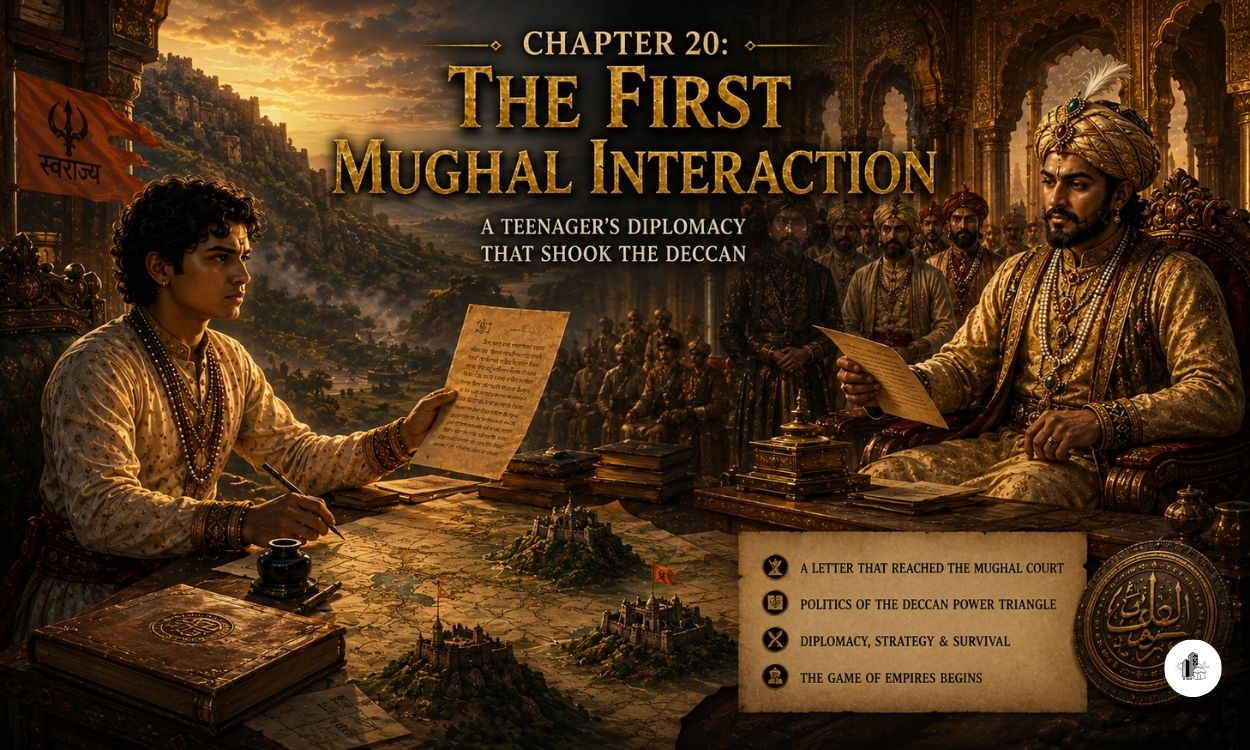
The Swarajya Chronicles: Book 2, Chapter 20
Current Focus: The Boy and the Vow (1630–1647)
Progress: 20 / 100 Chapters Completed….
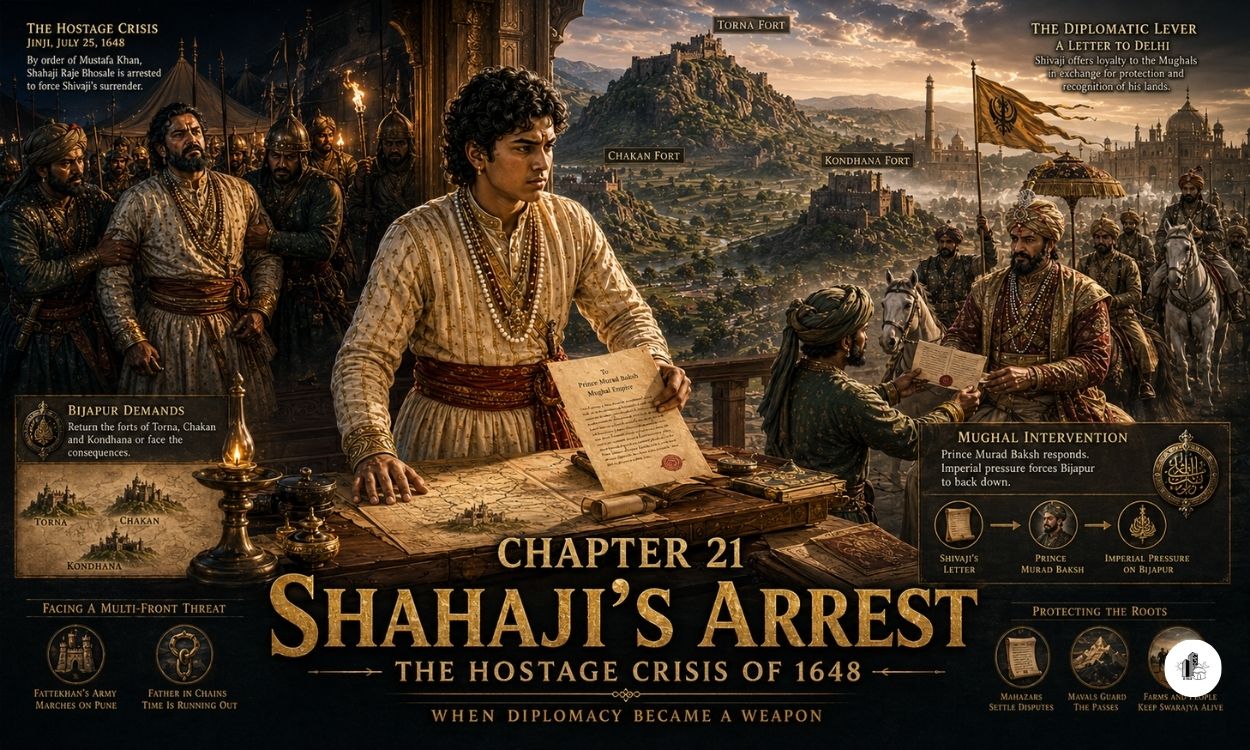
In late 1647, a seventeen-year-old youth sitting in the hills of Pune sent a formal diplomatic letter directly to Prince Murad Baksh. Murad Baksh was the son of the Mughal Emperor Shah Jahan and the grand governor of the Deccan.
This was a dangerously bold move. Shivaji Bhosale was legally just a minor local landlord under the rival Bijapur Sultanate. Yet, he bypasses his own rulers completely to contact the massive northern superpower.
He did not write this letter out of fear. He used the ink of a diplomat to build a legal shield. Real-world imperial letters preserved in records like the Adab-i-Alamgiri confirm these early political games. This final chapter of Book 2 breaks down the cold, calculating diplomacy that brought the Maratha movement onto the grand imperial chessboard of India.
The Three-Way Geopolitical Chessboard
To understand why a teenager wrote to the Mughal palace, you must look at the regional power balance. Three massive forces controlled the lives of ordinary people in the Deccan.
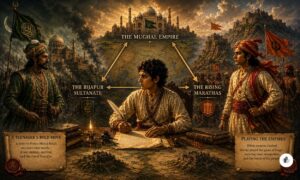
The Mughal Empire constantly wanted to conquer the southern kingdoms. The Bijapur Sultanate was desperate to protect its borders from the Mughals. Shivaji Bhosale sat right in the middle of this tense rivalry.
He knew that Bijapur was growing furious with his recent actions. He had already taken Torna, Chakan, and Kondhana. The Sultan’s court was preparing to strike back. Chhatrapati Shivaji Maharaj needed a giant insurance policy. By opening a direct line of communication with the Mughals, he played the two empires against each other.
“Wait, have you read this yet?”
The Strategy Behind the Ink: Playing the Mughal Card
Chhatrapati Shivaji Maharaj’s early letters to Prince Murad Baksh were masterpieces of psychological warfare. He used simple, deeply respectful, yet highly loaded political language.
Chhatrapati Shivaji Maharaj offered to help the Mughals against the Bijapur Sultanate. In exchange, he asked the Mughal court to officially recognize his rights over his ancestral lands, the Pune jagir. He also asked for a high imperial rank, a Mansab, for himself and his associates.
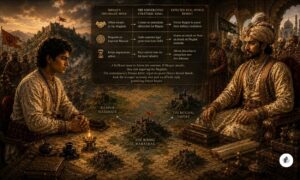
| Chhatrapati Shivaji Maharaj’s Diplomatic Move | The Underlyling Strategic Goal | Expected Real-World Result |
| Offers loyalty to the Mughals | Creates an immediate distraction for Bijapur | Forces Bijapur to pause their military retaliation |
| Requests an Imperial Mansab | Seeks supreme legal protection from Delhi | Makes an attack on Pune an attack on Mughal interests |
| Keeps negotiations active | Buys critical time for his local infantry | Allows Marathas to strengthen new fort defenses |
This was a brilliant move to freeze his enemies. If the Bijapur Sultanate sent an army to crush Chhatrapati Shivaji Maharaj, they risked angering the Mughals. The Mughals might look at Shivaji as their new southern asset.
The contemporary Persian letter registries prove that Prince Murad Baksh took the teenager seriously. He sent an official imperial reply promising future favors.
The Structural Machinery of Deccani Documents
This was not just about big empires. It was about controlling the local administration on the ground. While Chhatrapati Shivaji Maharaj wrote grand letters to the Mughals, his team focused heavily on local paperwork like Mahazars.
A Mahazar was an official legal statement signed by village elders and regional leaders. It decided who owned what land. Chhatrapati Shivaji Maharaj’s administration collected and verified these documents systematically.
Ordinary farmers who lived on a basic diet of millet Bhakri and raw onions did not care about distant emperors. They cared about who protected their land titles and fields. By blending grand Mughal diplomacy with strict local legal management, Chhatrapati Shivaji Maharaj secured both the top palace elites and the grassroots peasants.
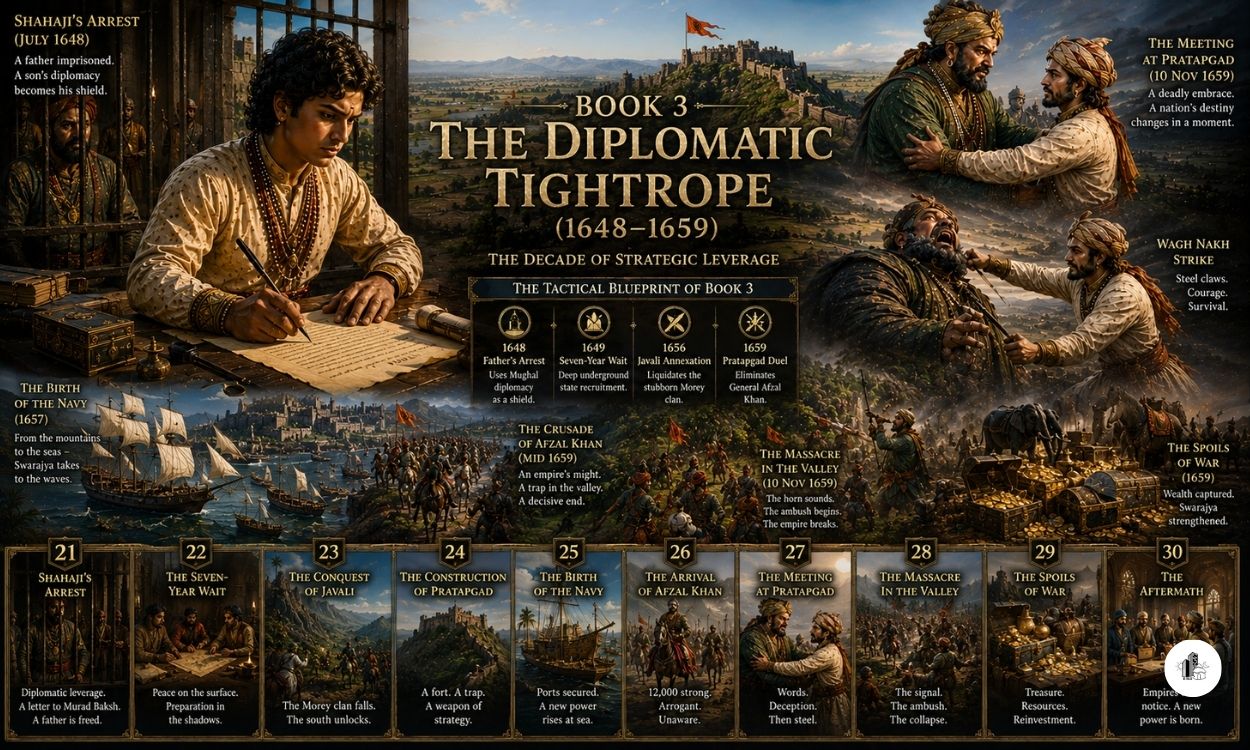
The Journey of Book 2: A Retrospective Summary (Chapters 11–20)
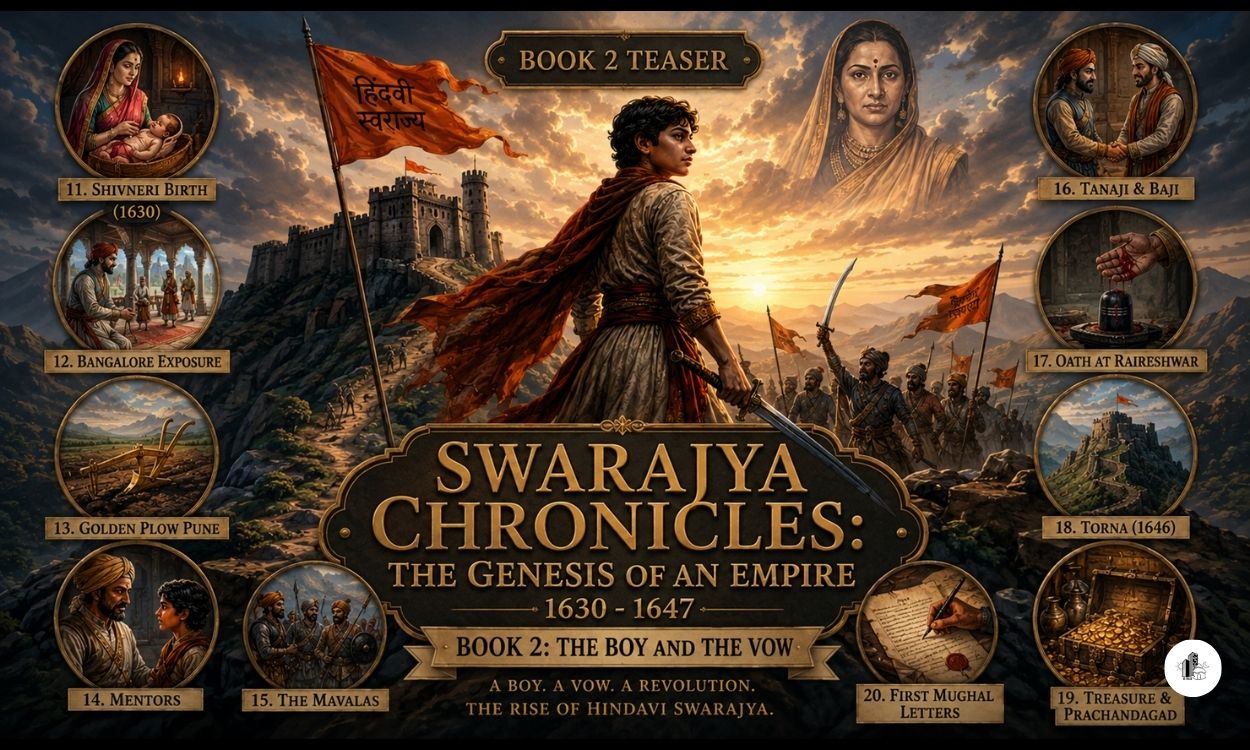
This chapter marks the definitive conclusion of Book 2: The Boy and the Vow (1630–1647). Over the last ten chapters, we watched a vulnerable local boy transform a small family estate into a tough, defenseless mountain shield. Let us revisit the critical milestones of this journey:
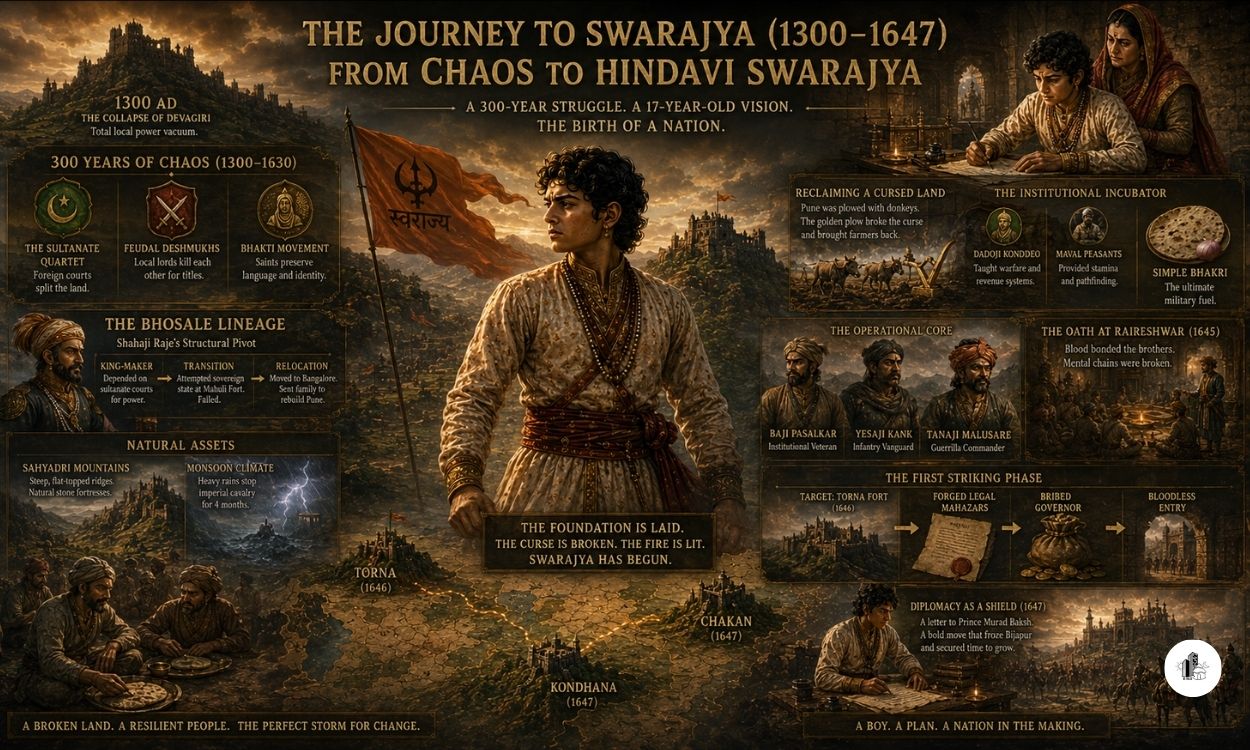
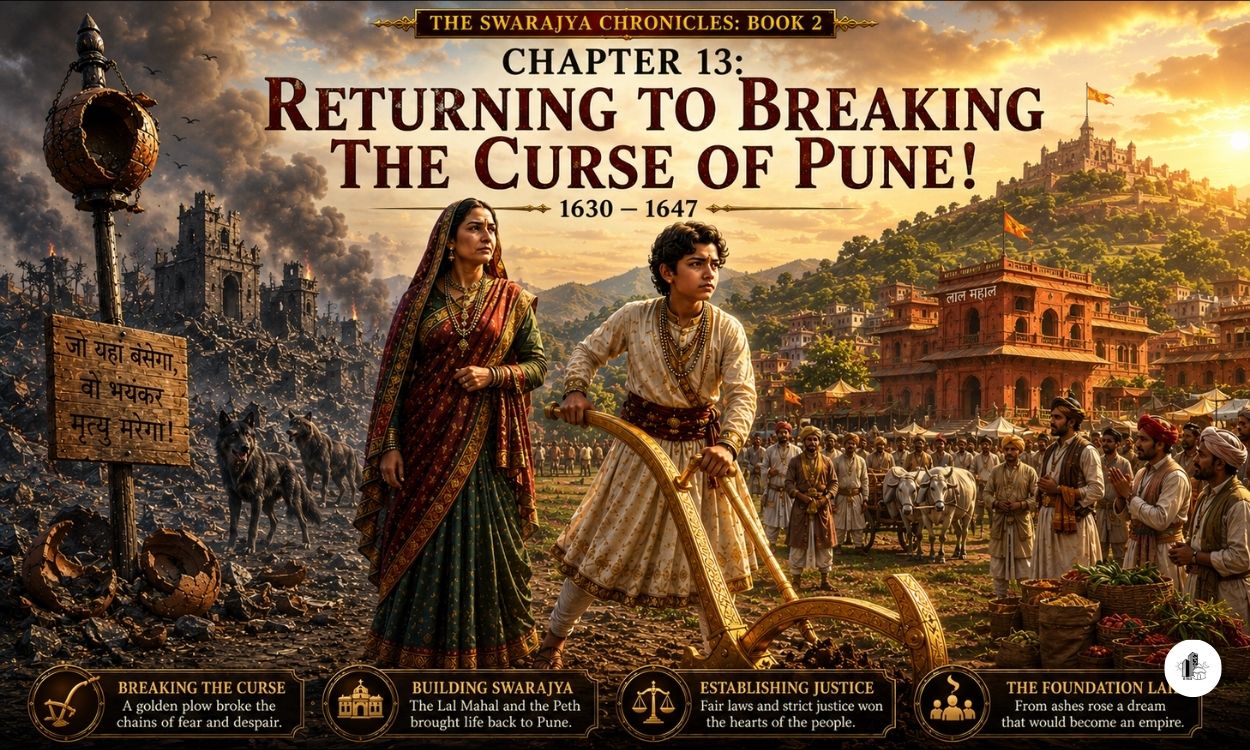
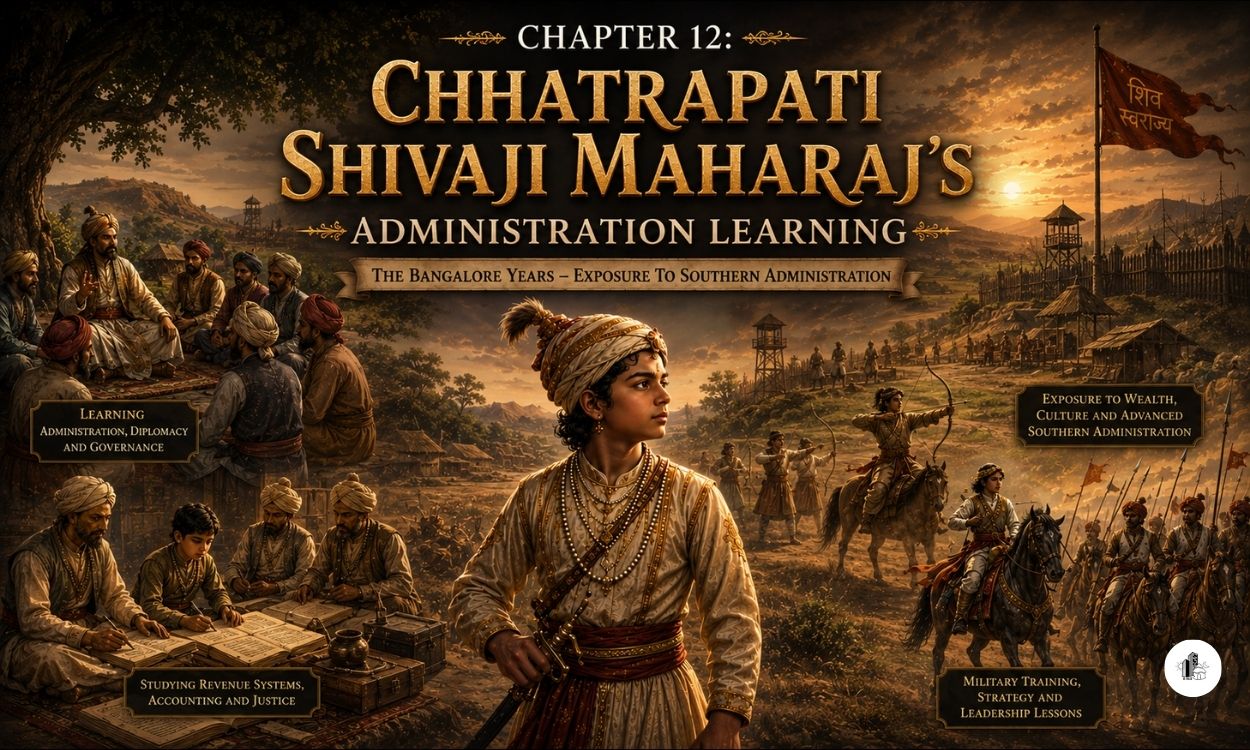
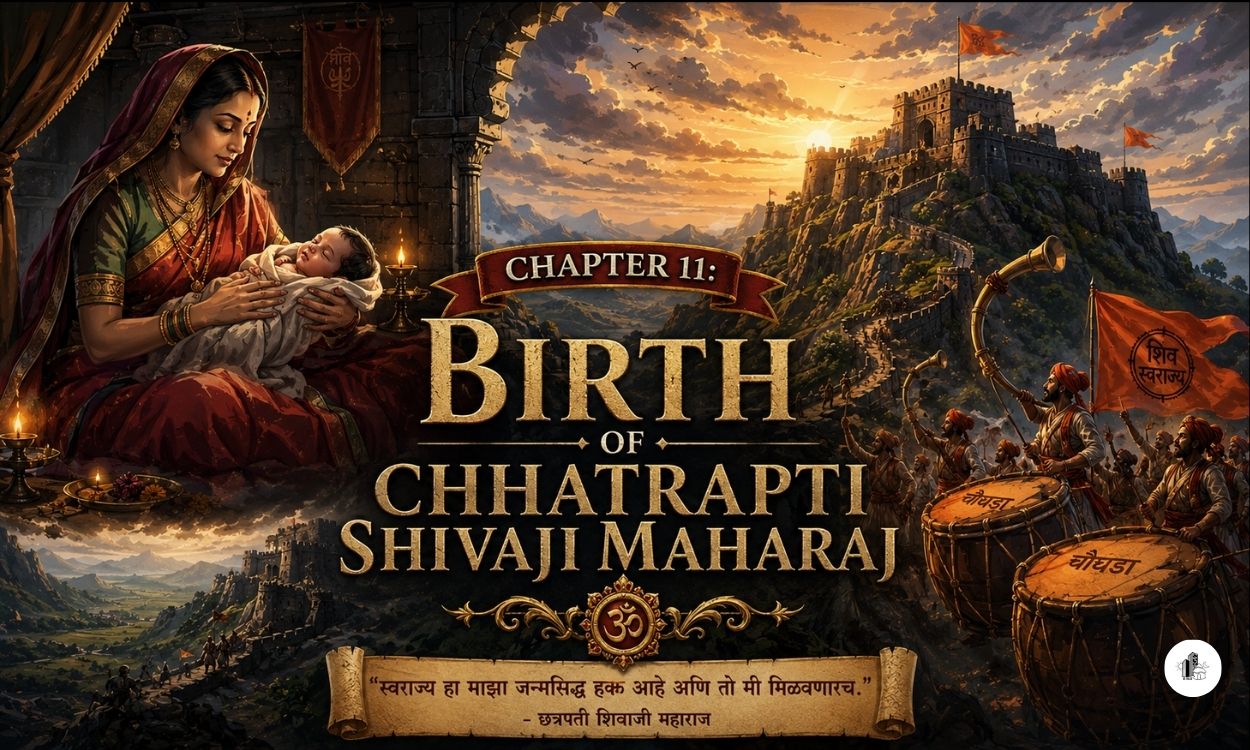
Chapter 11 to 13: The Early Foundations: We explored the harsh regional demographics of the Deccan. We analyzed how early drought, political chaos, and the constant movement of armies shaped the young prince’s mind.
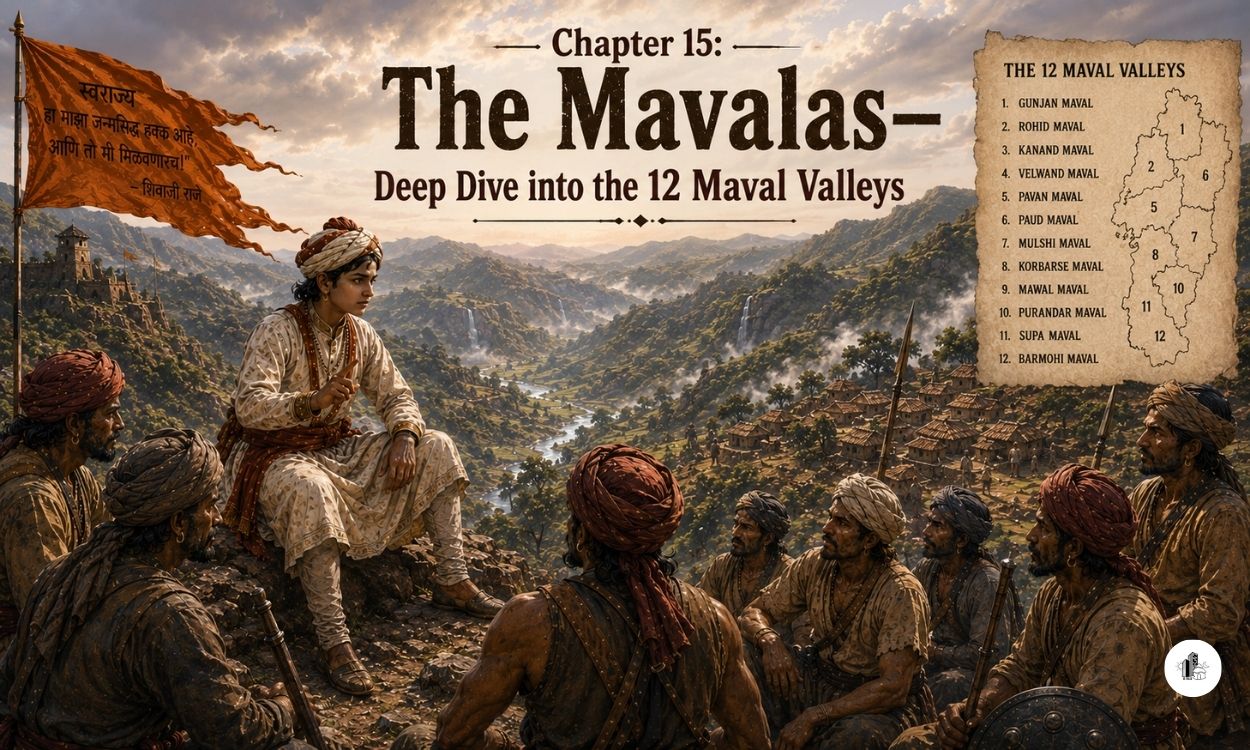
Chapter 14 and 15: The Geography of the Valleys: We mapped the 12 Maval valleys. We discovered how the unique mountain terrain acted as a natural military incubator for a new type of light mountain infantry.
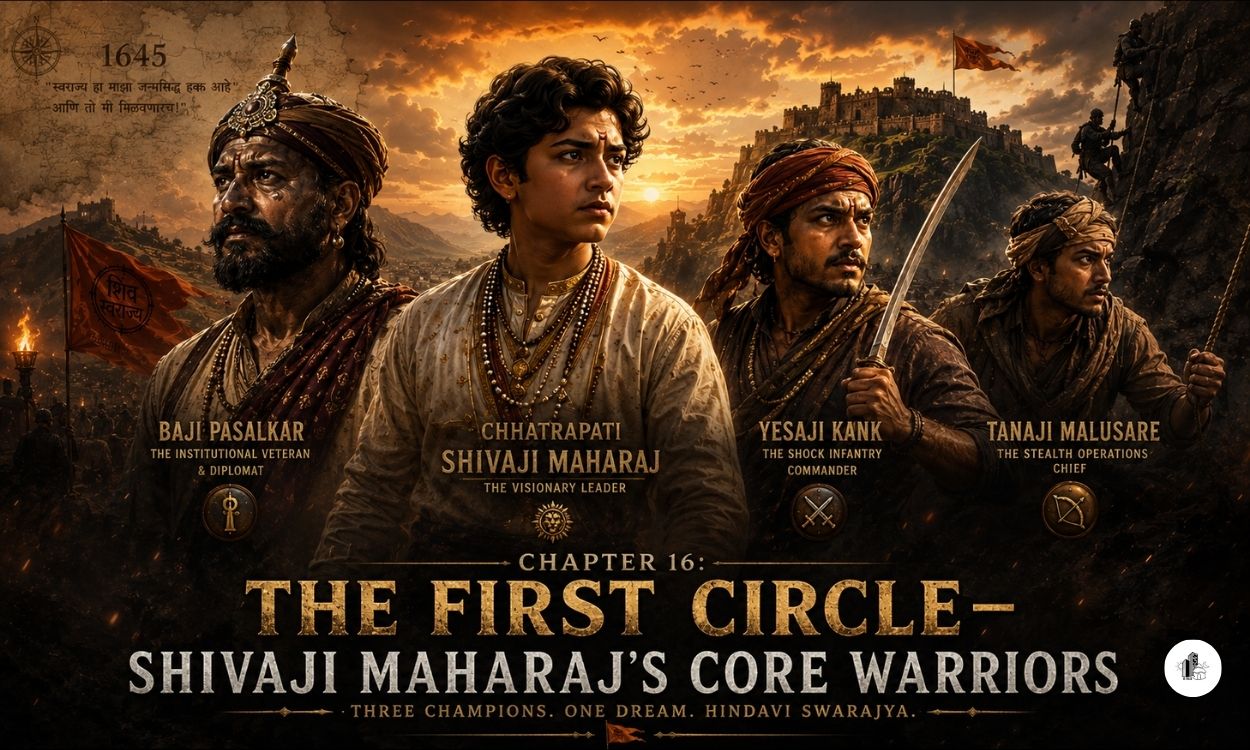
Chapter 16: The First Circle: We profiled the core leadership team. We analyzed the heavy military anchor Baji Pasalkar, the raw muscle of Yesaji Kank, and the stealth genius of Tanaji Malusare.
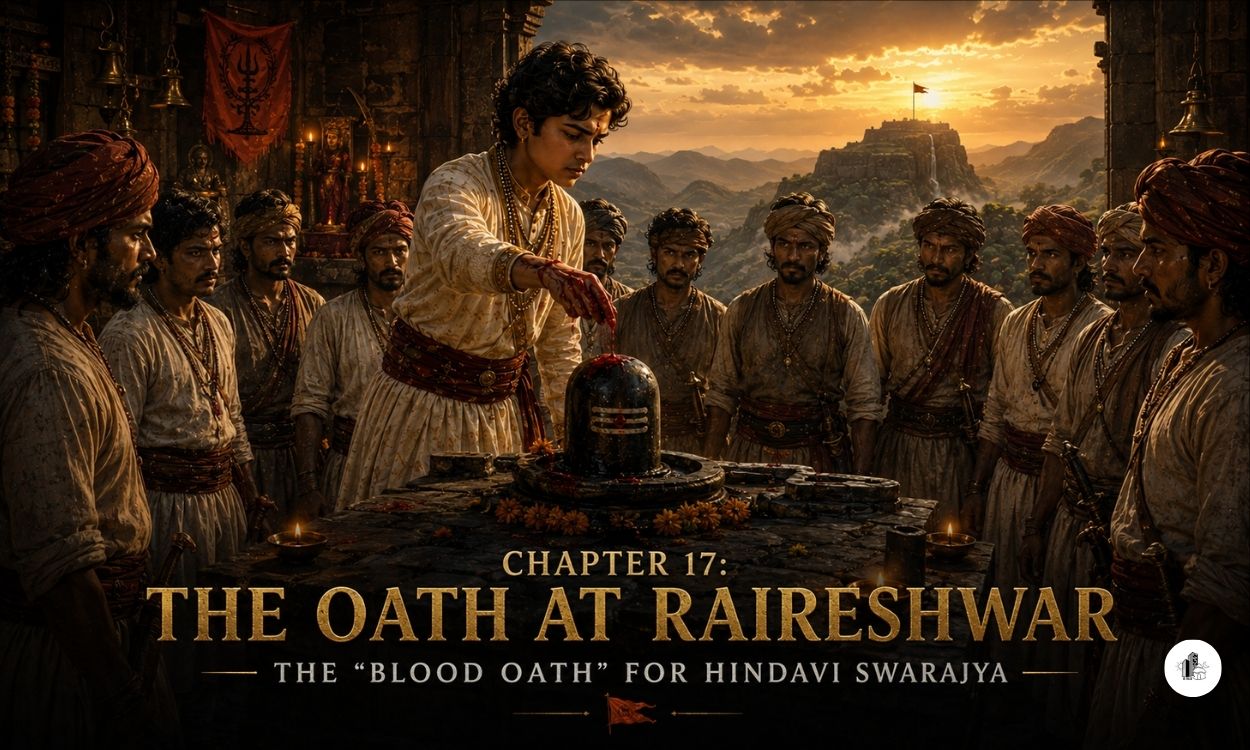
Chapter 17: The Oath at Raireshwar: We stepped inside the secret assembly of 1645. We looked at the psychological impact of the literal blood oath that broke the mental chains of serving foreign sultans.
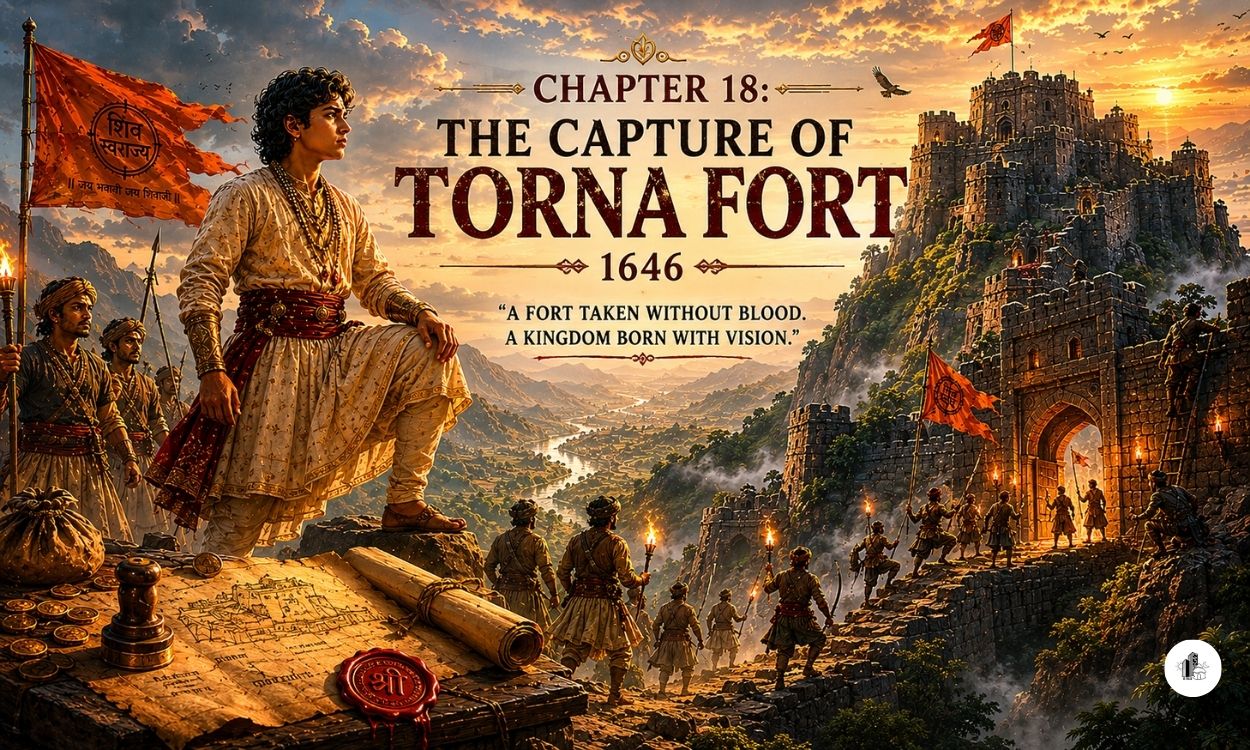
Chapter 18: The Capture of Torna: We dissected the brilliant bureaucratic heist of 1646. Shivaji used forged papers and targeted bribes to take the highest fort in Pune without shedding a single drop of blood.
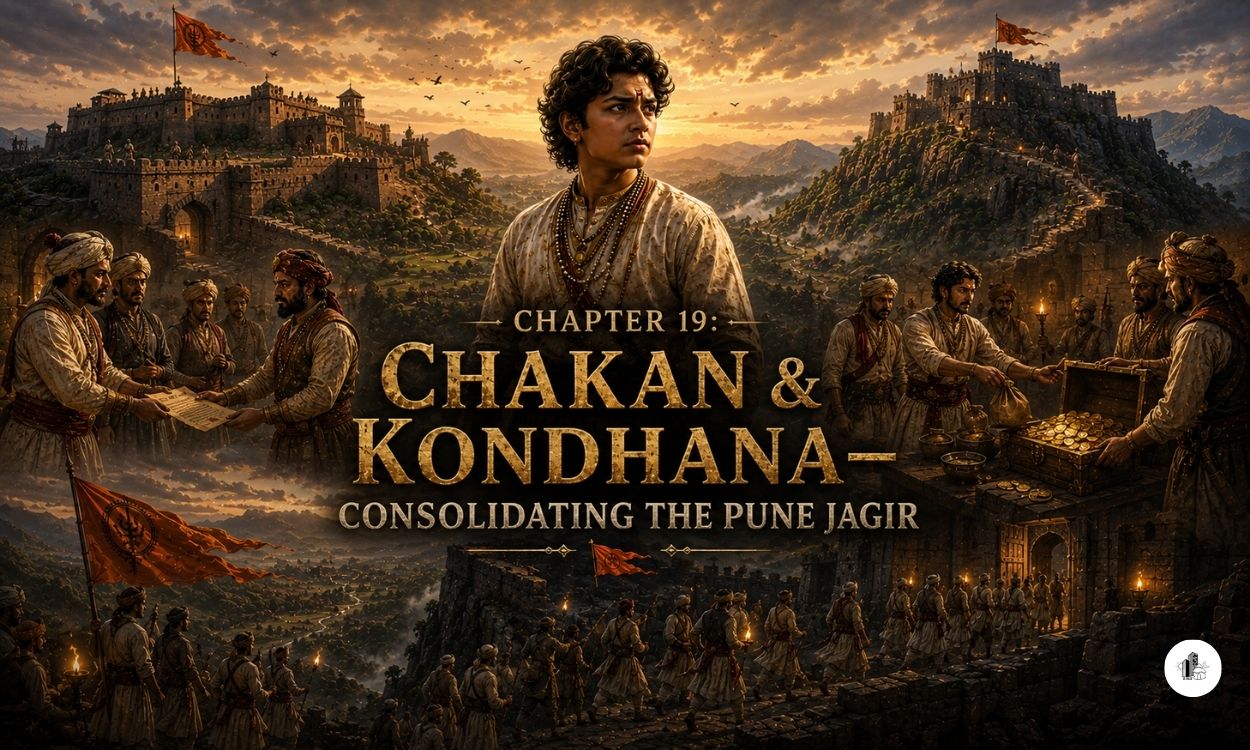
Chapter 19: Chakan and Kondhana: We observed the locking of the northern and southern gates of Pune in 1647. This move ensured that local tax revenues stayed home to fund a permanent rebellion.
Loving this analysis? Let’s stay connected!
Join our WhatsApp & Telegram Channels: Get the latest movie alerts and box office updates directly on your phone. [WhatsApp] & [Telegram]
Follow us on X (Twitter): For quick threads, daily polls, and viral cinema news. [Click Here]
Join our Quora Space: Participate in deep discussions and share your own theories with fellow movie buffs. [Click Here]
The End of the Beginning
By the end of 1647, the rules of the game had completely changed. The boy who started with nothing but a small, broken valley estate now controlled a network of strategic mountain forts. He possessed an elite, loyal core team of mountain fighters. Most importantly, he had just forced the wealthiest empire in the world to read his diplomatic letters.
The vow taken at the small temple of Raireshwar was no longer a distant dream. It was now a living, breathing geopolitical reality. Book 2 closes here, with the foundations of Swarajya laid deep in the black basalt rock of the Deccan. The storm was coming, but the young prince was finally ready.
What Do You Think?
Do you think it was too dangerous for a 17-year-old leader to invite the attention of the massive Mughal Empire so early in his rebellion? If you were in Shivaji’s place, would you have focused only on fighting Bijapur, or would you have played the risky game of high-level international diplomacy?




Leave a Reply