

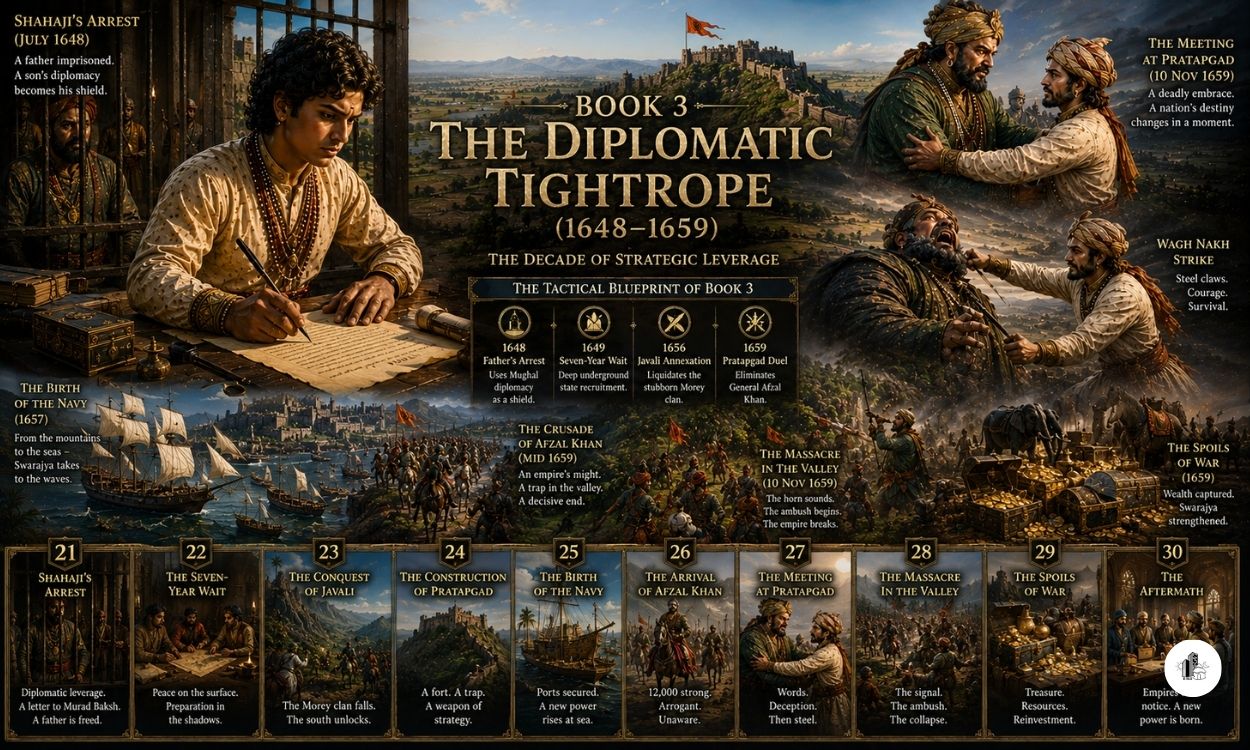
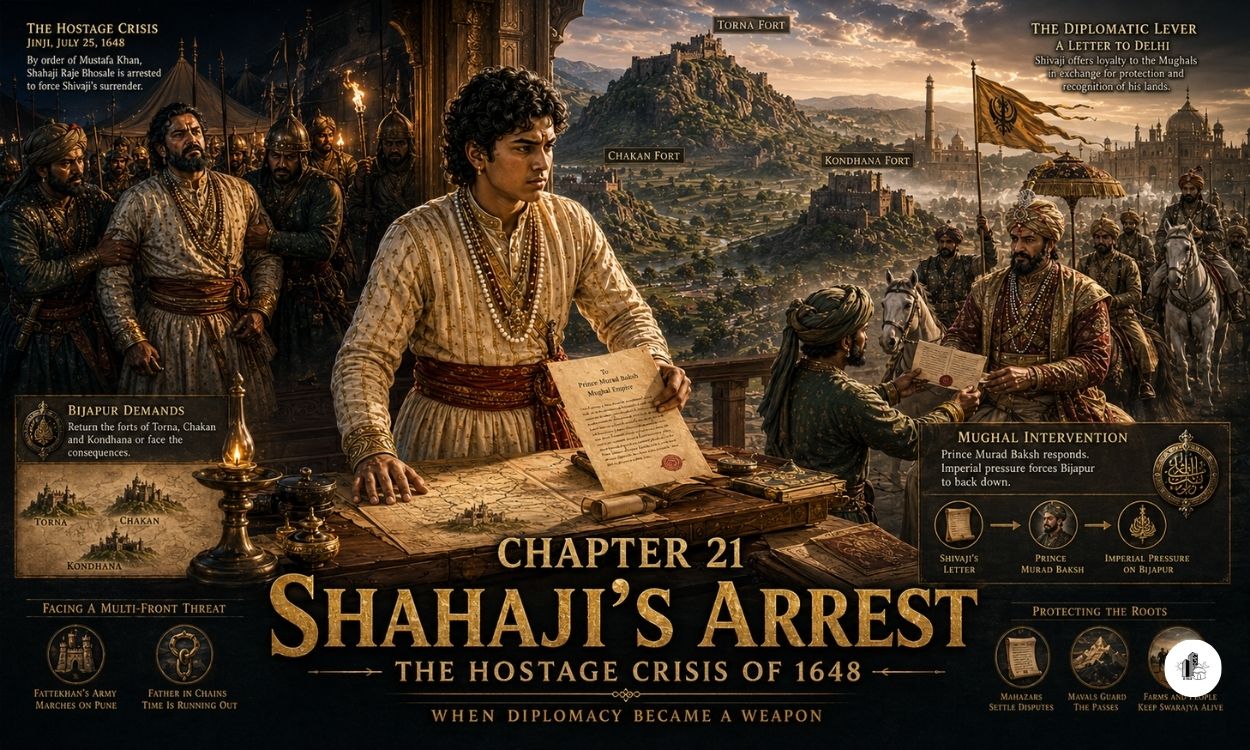
In July 1648, imperial soldiers grabbed Shahaji Raje Bhosale in a surprise midnight arrest near Jinji. The Adilshahi Sultanate of Bijapur finally struck back against the family. They wanted to crush the young rebel in Pune by holding his father hostage in a dark cell.
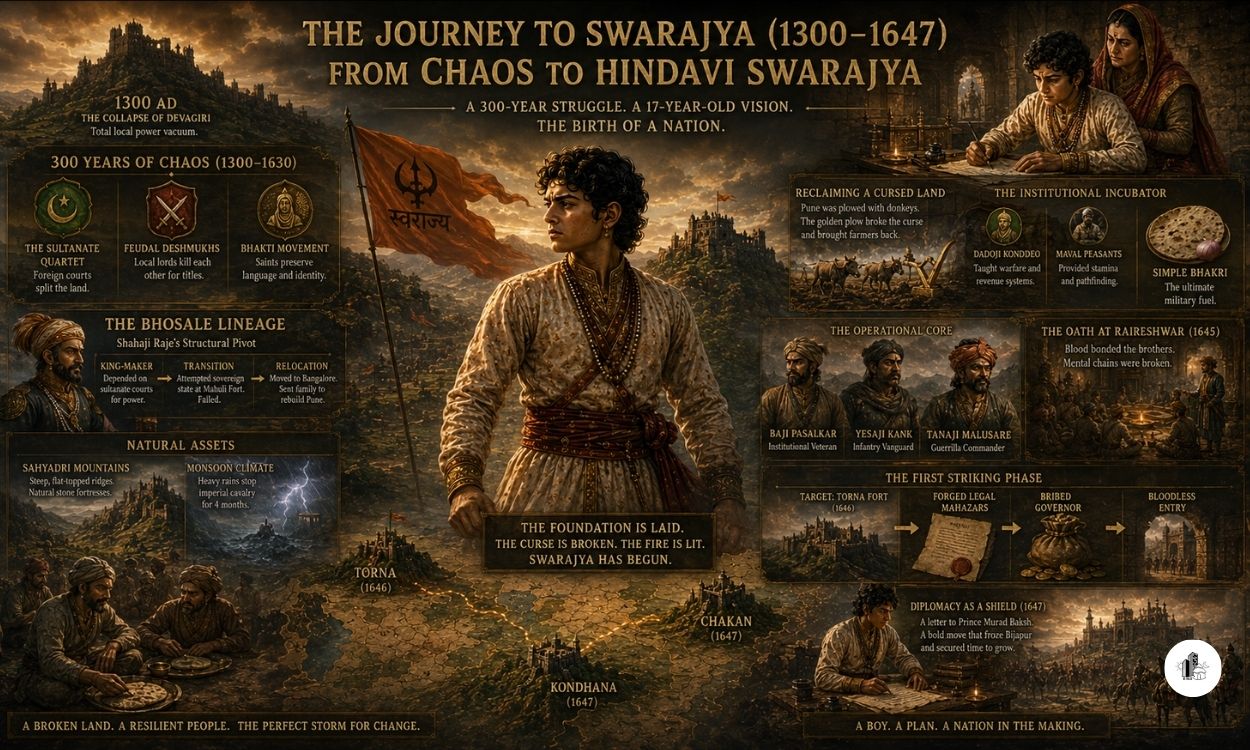
A standard teenage rebel would have surrendered his newly won forts immediately to save his family. Instead, eighteen-year-old Shivaji Bhosale picked up his pen and played a dangerous game of international chicken. He threatened to hand his entire territory over to the Mughal Empire if his father was harmed.
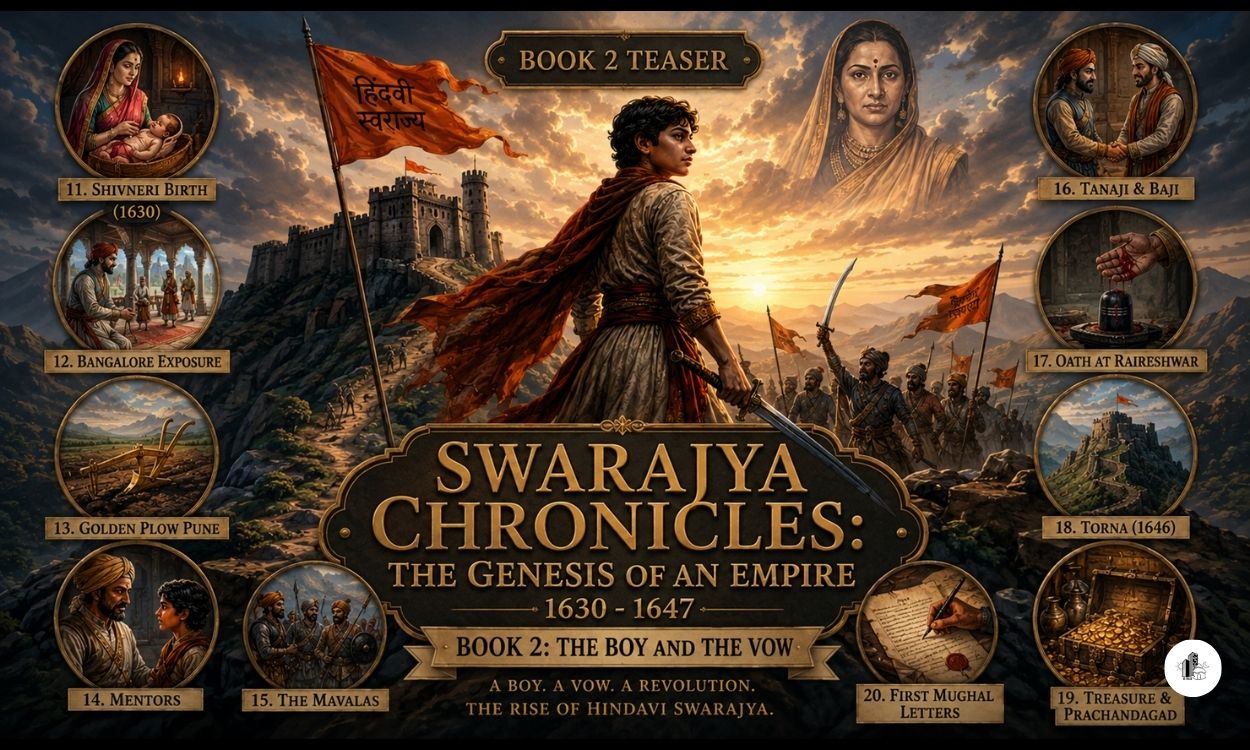
This single move forced a massive superpower to back down. Welcome to Book 3: The Diplomatic Tightrope (1648–1659). Over the next ten chapters, we will explore the brutal, unromanticized decade where the young Maratha movement survived total destruction and transformed into a permanent regional powerhouse.
“Wait, have you read this yet?”
The Swarajya Chronicles: Why We Are Rebuilding the Story of a King
The Tactical Blueprint of Book 3 (Chapters 21–30)
       The Decade of Strategic Leverage
───────────────────────────────────────────────
[1648] Father's Arrest  ► Uses Mughal diplomacy as a shield.
[1649] Seven-Year Wait  ► Deep underground state recruitment.
[1656] Javali Annexation ► Liquidates the stubborn Morey clan.
[1659] Pratapgad Duel   ► Eliminates General Afzal Khan.
The next phase of our journey moves away from simple fort-grabbing. It enters the dark world of political assassinations, naval engineering, and high-stakes psychological operations.
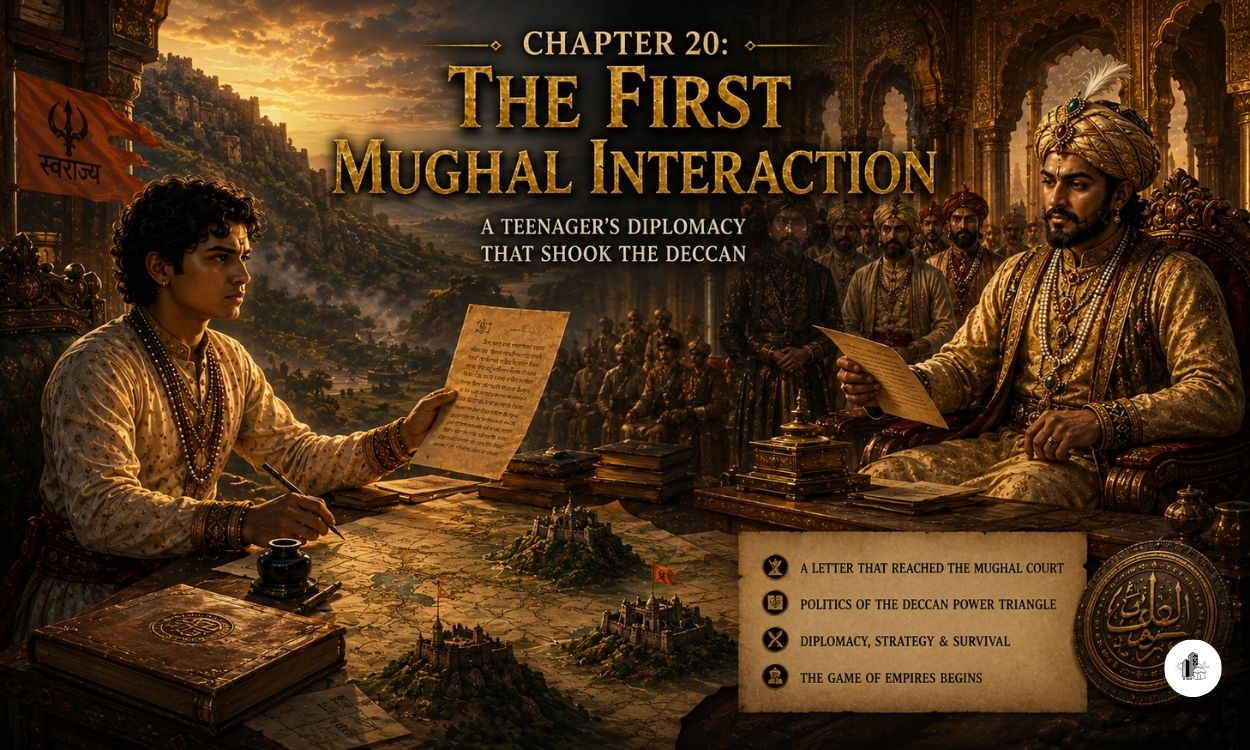
Chapter 21: Shahaji Raje’s Arrest
We look at the cold structural mechanics of the 1648 hostage crisis. Shivaji used a brilliant diplomatic lever by writing to Prince Murad Baksh. He offered Maratha loyalty to Delhi in exchange for his father’s safety. This move completely trapped the Adilshahi court, forcing them to release Shahaji Raje.
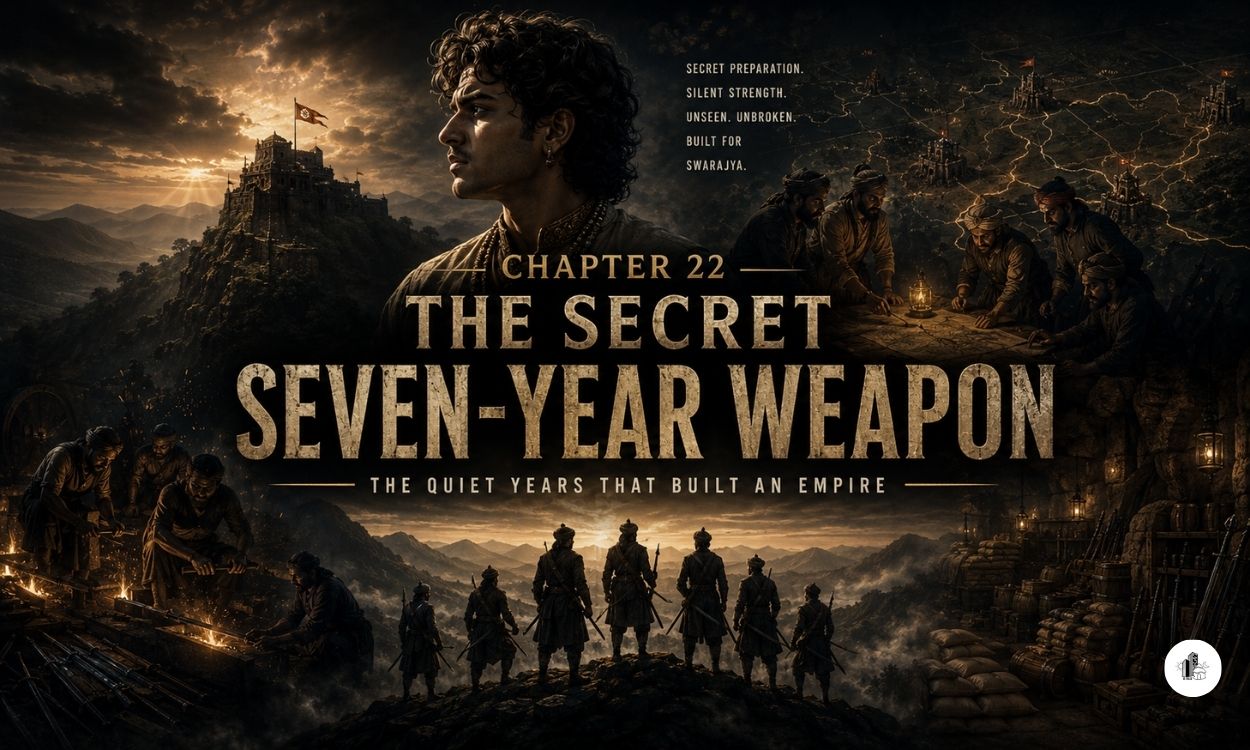
Chapter 22: The Seven-Year Wait
You cannot fight a superpower every single day. From 1649 to 1655, Shivaji maintained a fake, quiet peace with his neighbors. Behind this calm wall, his administration ran a massive underground mobilization. They quietly stockpiled local grain, mapped deep mountain passes, and recruited thousands of new Mavali fighters.
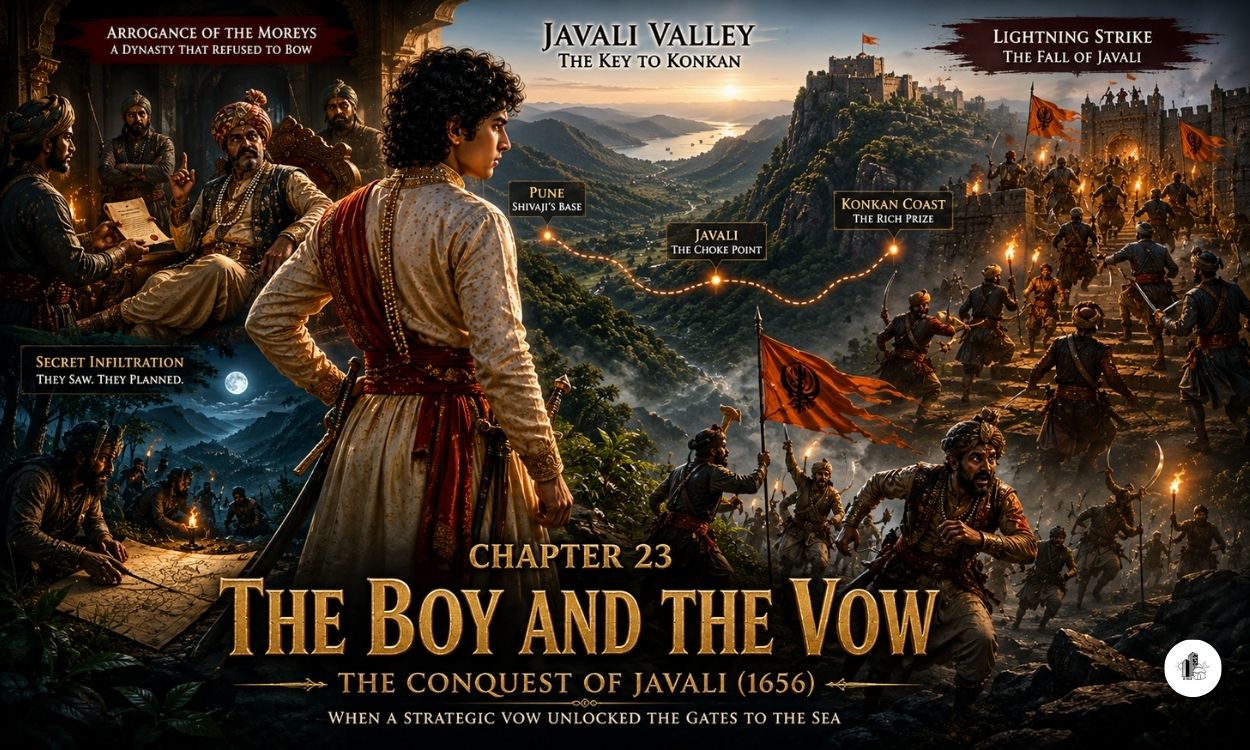
Chapter 23: The Conquest of Javali
In January 1656, Shivaji executed his most controversial domestic operation. The Morey clan of Javali were powerful Maratha lords loyal to Bijapur. They blocked Shivaji’s access to the southern coast. Shivaji launched a fast, multi-pronged attack to eliminate the stubborn Moreys, unlocking the dense valleys of Mahabaleshwar.
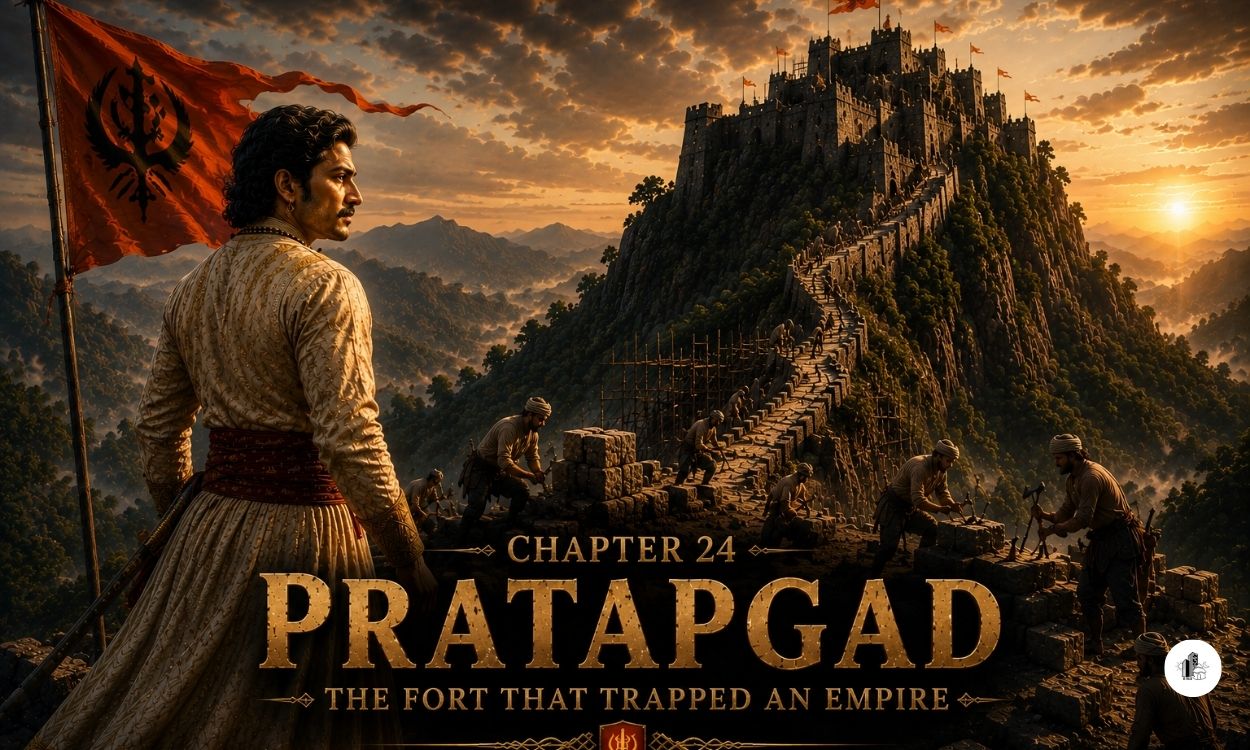
Chapter 24: The Construction of Pratapgad
Directly after conquering Javali, Shivaji hired the master builder Hiroji Indulkar. He built the massive fortress of Pratapgad on a razor-sharp mountain spur called Umbraka. This fort was not just built for defense. It was a physical trap designed to pull heavy imperial armies into a narrow, deadly jungle valley.
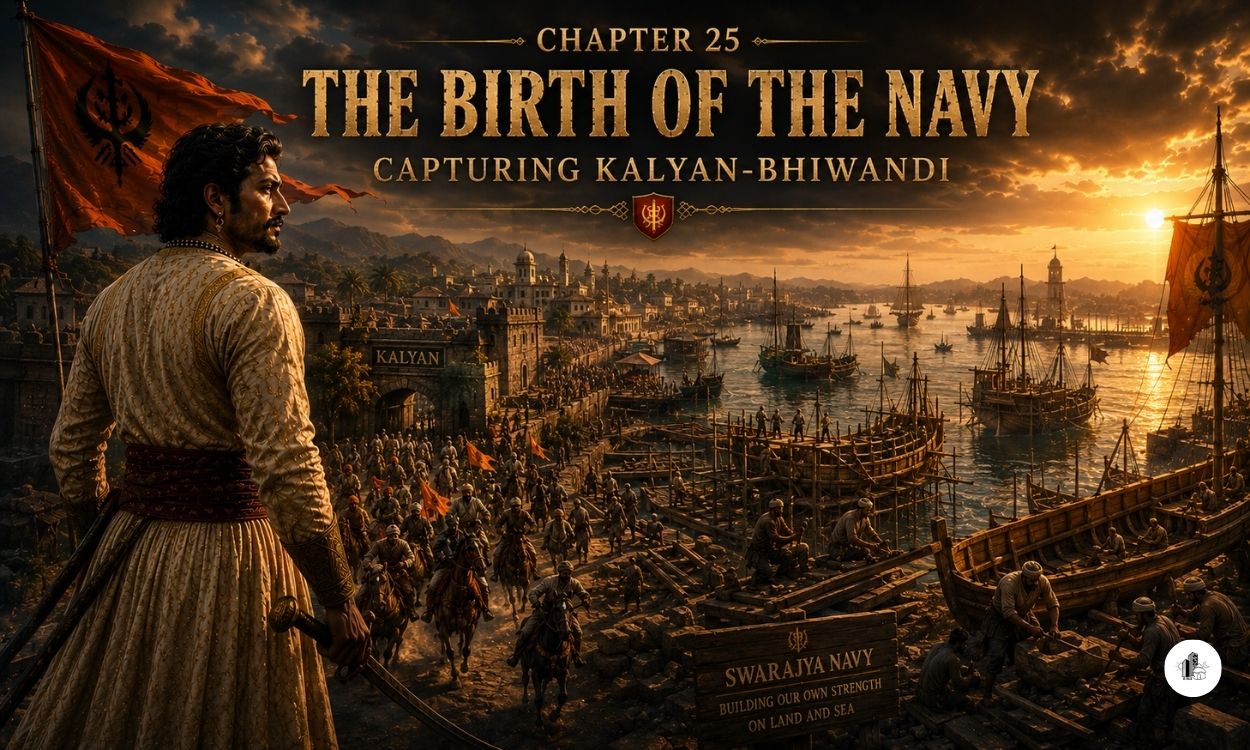
Chapter 25: The Birth of the Navy
In 1657, Shivaji’s infantry marched down into the coastal towns of Kalyan and Bhiwandi. He did something no other contemporary local king thought of doing. He established a sovereign dockyard. This move marked the official birth of the Maratha Navy to challenge European and African naval powers on the Arabian Sea.
The Great Crisis: The Crusade of Afzal Khan
The quiet years ended brutally in 1659. The Bijapur court grew tired of the Maratha expansion and sent their top giant general to finish the rebellion once and for all.
       The Pratapgad Choke Point (Nov 1659)
─────────────────────────────────────────────────────
Imperial Army: 12,000 Elite Cavalry + Heavy Artillery
       │
       ▼ (Drawn into dense Javali forests)
       │
Maratha Setup: Hidden Infantry + Fixed Ambush Positions
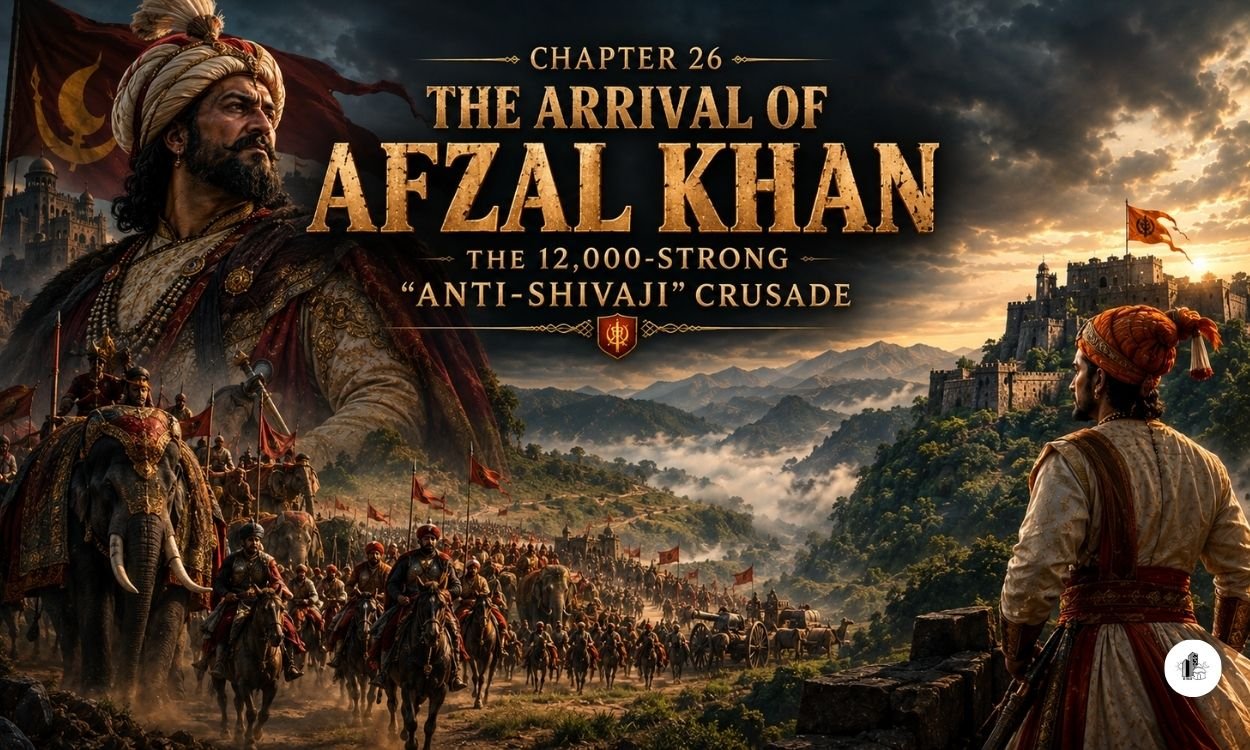
Chapter 26: The Arrival of Afzal Khan
In mid-1659, General Afzal Khan marched out of Bijapur with an elite army of 12,000 cavalry and heavy artillery. He destroyed local temples along his route to provoke Shivaji into a careless open-field battle. Shivaji ignored the emotional bait and stayed safely behind the stone walls of Pratapgad.
Chapter 27: The Meeting at Pratapgad
On November 10, 1659, the two leaders met inside a special wooden pavilion built on the slopes of the mountain. This chapter breaks down the raw psychological breakdown of that afternoon. Shivaji wore hidden iron claws, known as Wagh Nakh, and a concealed dagger under his fine silk clothes. When the giant general attempted a fatal embrace, Shivaji tore open his abdomen in self-defense.
Chapter 28: The Massacre in the Valley
The moment the general fell, a hidden Maratha horn blasted through the hills. This was the signal for a pre-planned, total ambush. The light Mavali infantry rushed out from the thick trees, completely surrounding the trapped enemy cavalry. The grand imperial army disintegrated inside the narrow, unfamiliar valley within a few hours.
Loving this analysis? Let’s stay connected!
Join our WhatsApp & Telegram Channels: Get the latest movie alerts and box office updates directly on your phone. [WhatsApp] & [Telegram]
Follow us on X (Twitter): For quick threads, daily polls, and viral cinema news. [Click Here]
Join our Quora Space: Participate in deep discussions and share your own theories with fellow movie buffs. [Click Here]
The Technical Analysis of Geopolitical Shifts
The victory at Pratapgad completely changed the financial and political future of the region. It proved that the Swarajya blueprint was strong enough to defeat a major imperial power.
| Metric of Change | Before November 1659 | After November 1659 |
| Maratha Wealth | Limited local agricultural taxes | Thousands of captured horses, camels, and gold coins |
| Territorial Range | Small, isolated pockets around Pune | Total dominance over the Western Ghats and Konkan coast |
| Imperial Status | Viewed as a minor regional gang of rebels | Recognized as a sovereign military state by Delhi |
Chapter 29: The Spoils of War
The Maratha army captured immense treasure from the defeated camp. This included 65 elephants, 4,000 horses, and massive chests of gold coins. Shivaji did not keep this wealth for personal pleasure. He used every single coin to expand his defense systems and pay permanent salaries to his wounded soldiers.
Chapter 30: The Aftermath
The book closes with the political shockwaves that hit the royal palace in Delhi. Emperor Shah Jahan and Prince Aurangzeb watched the Deccan with deep concern. They realized that this was no longer a small, local border issue. A new, permanent indigenous power had officially arrived on the map of India.
What Do You Think?
Do you think Shivaji’s controversial operation against the Morey clan of Javali was completely justified to build a unified nation? How different would the history of India look if Shivaji had lost his nerve inside the meeting pavilion on November 10, 1659?







Leave a Reply