

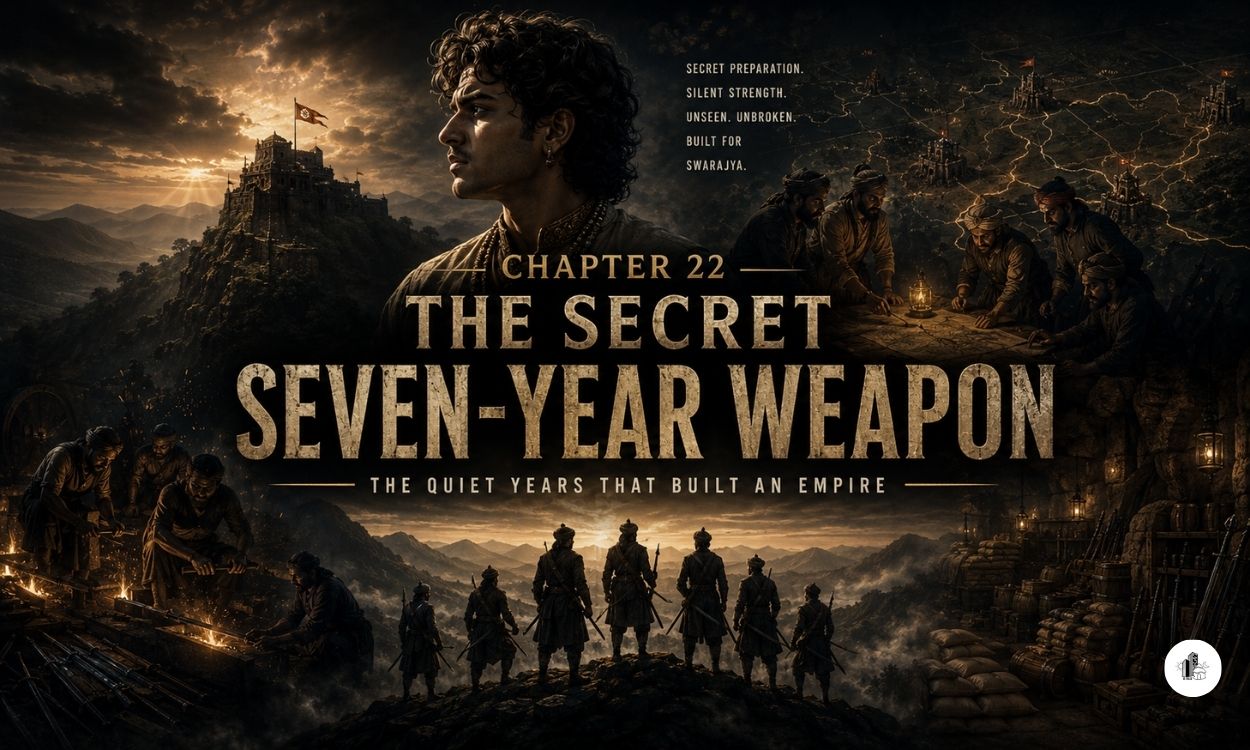
The Swarajya Chronicles: Book 3, Chapter 22
Current Focus: The Boy and the Vow (1648–1659)
Progress: 22 / 100 Chapters Completed….
Between 1649 and 1655, the borders of the Pune jagir fell completely silent. Shivaji Bhosale stopped capturing enemy fortresses. He did not launch a single raid against his neighbors. He paid his taxes regularly to the Adilshahi Sultanate of Bijapur.
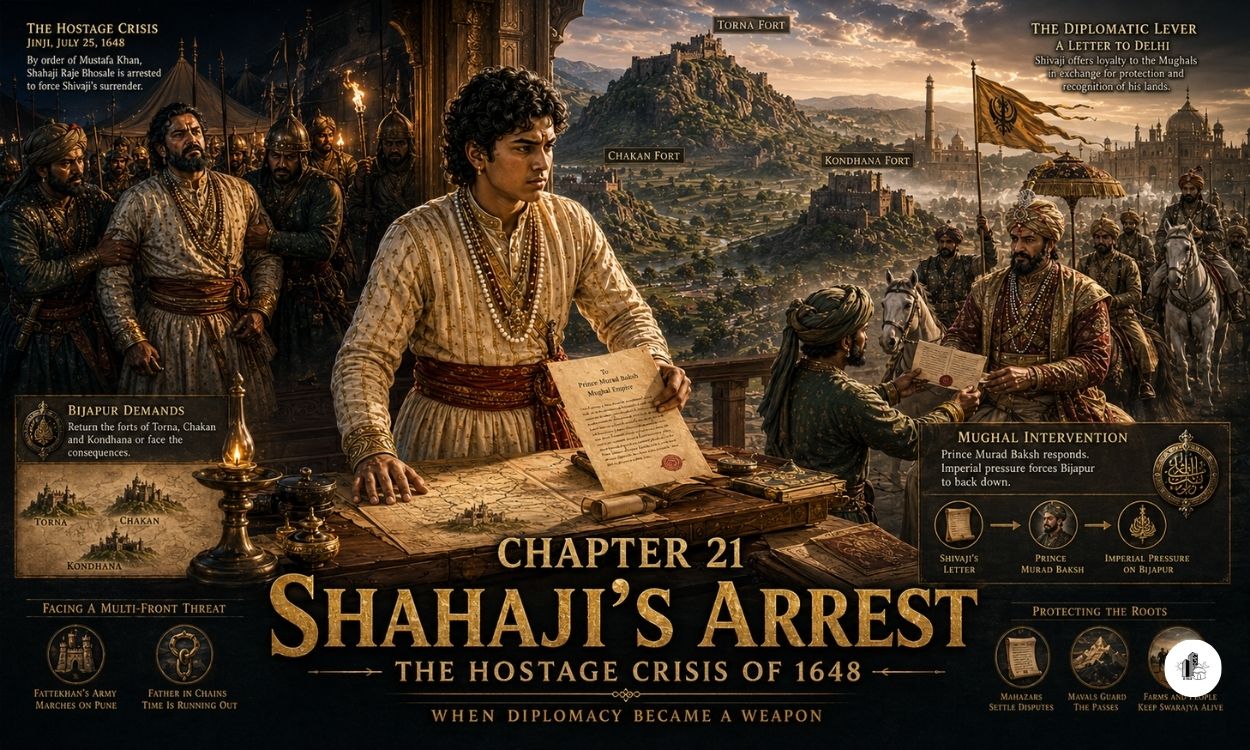
To the royal court in Bijapur, it looked like their recent political squeeze had worked. They had just released Chhatrapati Shivaji Maharaj’s father, Shahaji Raje, from a dark prison cell. In exchange, Chhatrapati Shivaji Maharaj returned the massive mountain fortress of Kondhana. The Sultan’s ministers assumed the young rebel was finally broken, scared, and tamed.
They were completely wrong. This quiet period was not a surrender. It was a calculated, seven-year strategic freeze. Chhatrapati Shivaji Maharaj used this peace as a legal smoke screen. Behind it, he secretly built an elite guerrilla army and a hidden underground state.
The Illusion of Submission
Following the intense 1648 hostage crisis, Chhatrapati Shivaji Maharaj signed a formal peace agreement. He understood a vital rule of asymmetric warfare. You cannot fight a massive empire every single day without running out of resources.
               The Strategic Illusion Matrix (1649–1655)
────────────────────────────────────────────────────────────────────────
What the Sultan Saw:                      What Was Actually Happening:
• Safe, quiet borders                     • Systematic mapping of mountain paths
• Regular tax payments                    • Secret weapons manufacturing
• A submissive young landlord             • Underground recruitment of valley youth
Historical records like the Jedhe Shakavali confirm this total lack of open conflict. Chhatrapati Shivaji Maharaj acted like a simple, peaceful landlord. He focused entirely on farming and local court cases.
This behavior caused imperial spies to lower their guard. The Sultanate stopped sending heavy cavalry units to watch the Pune borders. They diverted their best troops to fight wars in the distant south. Chhatrapati Shivaji Maharaj used this exact distraction to transform his small militia into a highly trained, permanent standing army.
“Wait, have you read this yet?”
The Underground Military Assembly
An army requires two major things to survive: weapons and men. Manufacturing swords and spears openly in a town square would instantly alert enemy spies. Chhatrapati Shivaji Maharaj shifted his entire production network deep into the dense forests and hidden mountain valleys.
Secret Weapons Factories
Blacksmiths worked inside hidden ravines under the cover of night. They built furnaces that did not release thick, visible columns of smoke. They manufactured lightweight, razor-sharp swords, spears, and iron chain mail.
The Silent Recruitment of the Mavalas
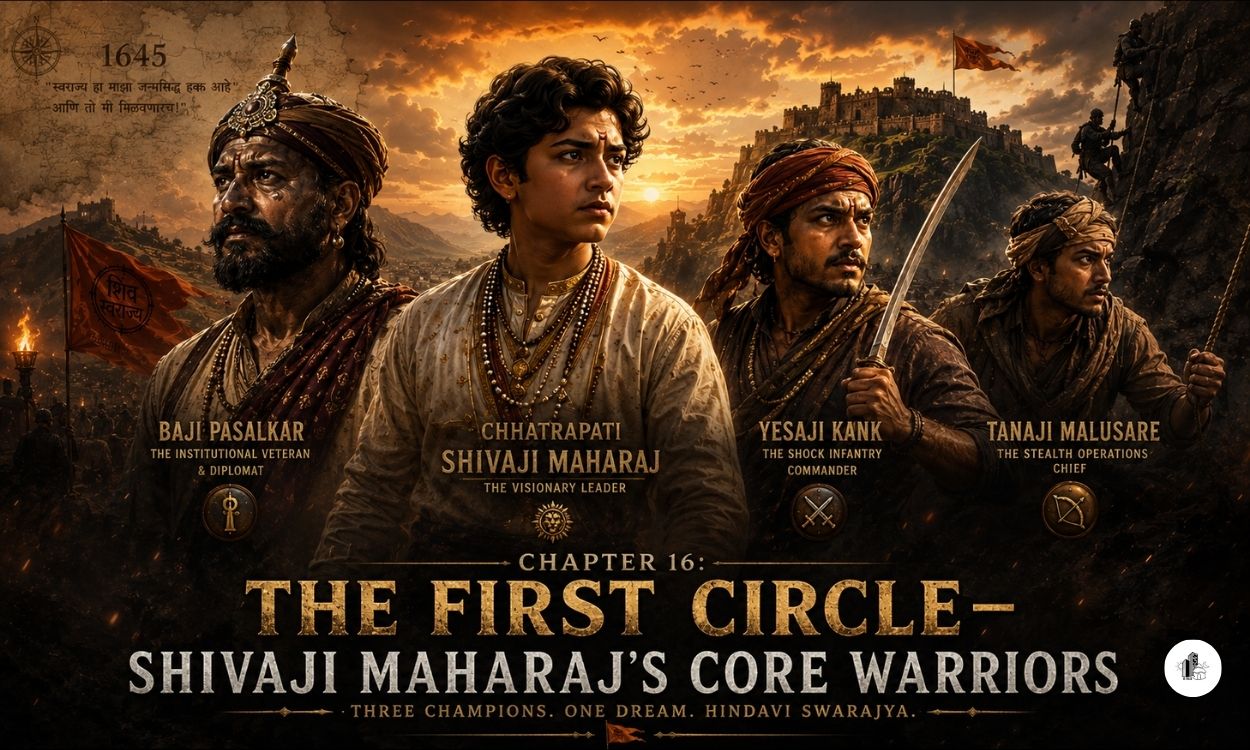
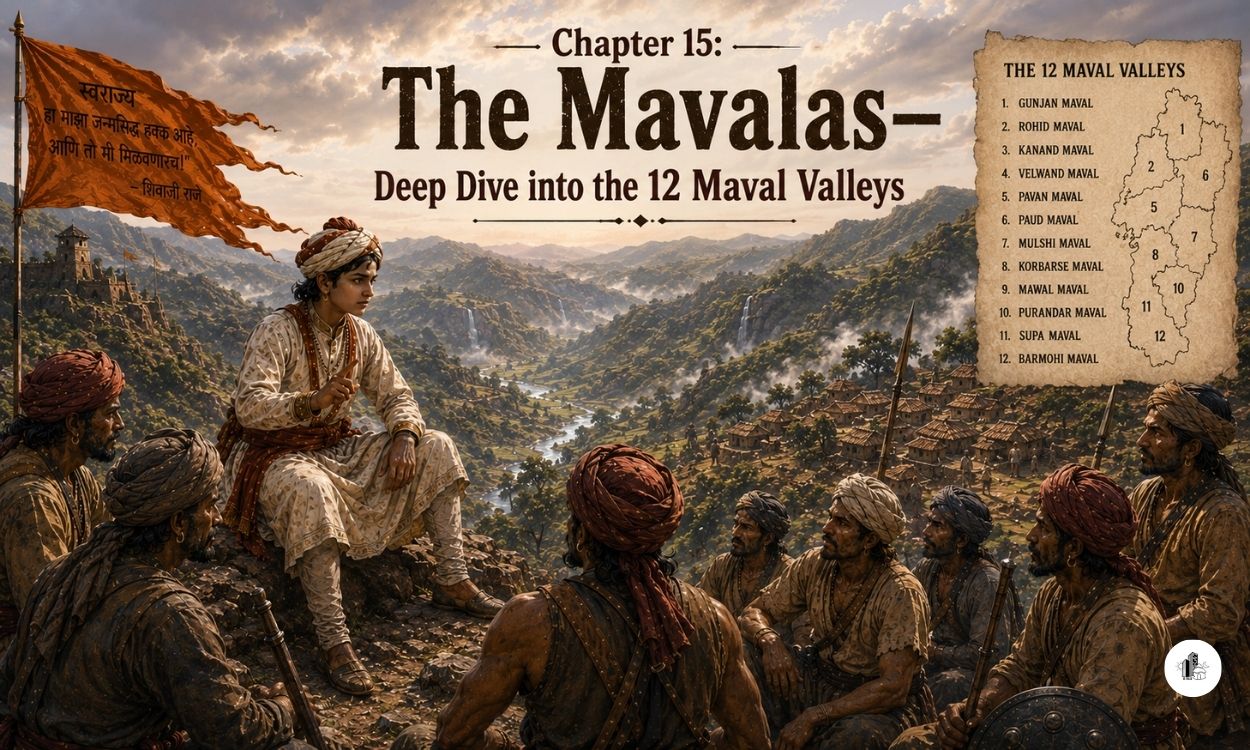
The local youth of the 12 Maval valleys were the core strength of this secret project. Shivaji’s close captains, Tanaji Malusare, Yesaji Kank, and Baji Pasalkar, traveled continuously through the hills.
The Cover Story: They organized local wrestling matches and physical village festivals.
The Real Goal: They quietly spotted the strongest, fastest youths in the mountains.
The Training: They trained these boys in high-speed night climbing, forest pathfinding, and silent archery.
These young men did not live in formal military barracks. They stayed in their regular farming villages. They spent their days planting crops and eating their simple meals of millet Bhakri and raw onions. However, the moment a secret messenger arrived at their door, they were ready to pick up their hidden weapons and gather at a designated mountain path within two hours.
Reorganizing the Local Bureaucracy
An underground army cannot function without a highly structured financial system. Chhatrapati Shivaji Maharaj utilized traditional legal and land documents, known as Mahazars, to quietly change how the local economy worked.
[Old Feudal Structure] ──► Taxes went to corrupt lords ──► Wealth left Pune
[Shivaji's New Setup]   ──► Taxes kept in local treasuries ──► Used for secret army salaries
Chhatrapati Shivaji Maharaj personally met with the regional valley chiefs, the Deshmukhs. He used strict legal arbitration to settle their old family blood feuds. He convinced them to stop wasting their young men in private clan wars. Instead, he channeled their collective energy into a single, unified administrative system.
| Strategic Metric | Before the Seven-Year Wait (1648) | End of the Seven-Year Wait (1655) |
| Army Structure | Casual, part-time hill militia | Structured, highly disciplined guerrilla force |
| Weapon Supply | Dependent on captured enemy gear | Self-sufficient, hidden local manufacturing |
| Feudal Status | Constant inner wars between Deshmukhs | Unified local leadership answering to Pune |
| Financial State | Low cash reserves, unstable economy | High grain reserves, secret cash treasuries |
Chhatrapati Shivaji Maharaj also built a hidden network of grain storage facilities inside his remote mountain forts. If a massive enemy army invaded Pune in the future, Chhatrapati Shivaji Maharaj’s forces could burn the lowland fields and retreat up into the hills. They could comfortably survive for months on these hidden food reserves while the enemy starved on the flat plains.
Loving this analysis? Let’s stay connected!
Join our WhatsApp & Telegram Channels: Get the latest movie alerts and box office updates directly on your phone. [WhatsApp] & [Telegram]
Follow us on X (Twitter): For quick threads, daily polls, and viral cinema news. [Click Here]
Join our Quora Space: Participate in deep discussions and share your own theories with fellow movie buffs. [Click Here]
The Grand Blueprint Comes Together
By 1655, the secret administrative machinery was completely ready. Chhatrapati Shivaji Maharaj had successfully constructed a massive, invisible weapon right under the nose of the Sultan.
  [Seven Years of Silent Prep] ───► [10,000 Trained Mavala Guerrillas]
                                           │
                                           ▼
                                 [Ready for Final Strike]
He now controlled a highly disciplined force of over 10,000 trained infantrymen. These soldiers knew every hidden rock, cave, and narrow shortcut across the Western Ghats. They were completely invisible to the outside world, but they possessed a shared, burning ideological goal: the creation of Swarajya.
The quiet years were officially over. The legal smoke screen had served its complete purpose. Chhatrapati Shivaji Maharaj was no longer a vulnerable teenager protecting his father from a prison cell. He was now a mature, dangerous military general waiting for the perfect geopolitical opportunity to unleash his hidden army upon the empires of India.
What Do You Think?
Do you think maintaining a fake peace for seven years requires more discipline than fighting an active, open war? If you were a spy for the Bijapur Sultanate during this time, what specific clues would you look for to discover Chhatrapati Shivaji Maharaj’s hidden army?










Leave a Reply