


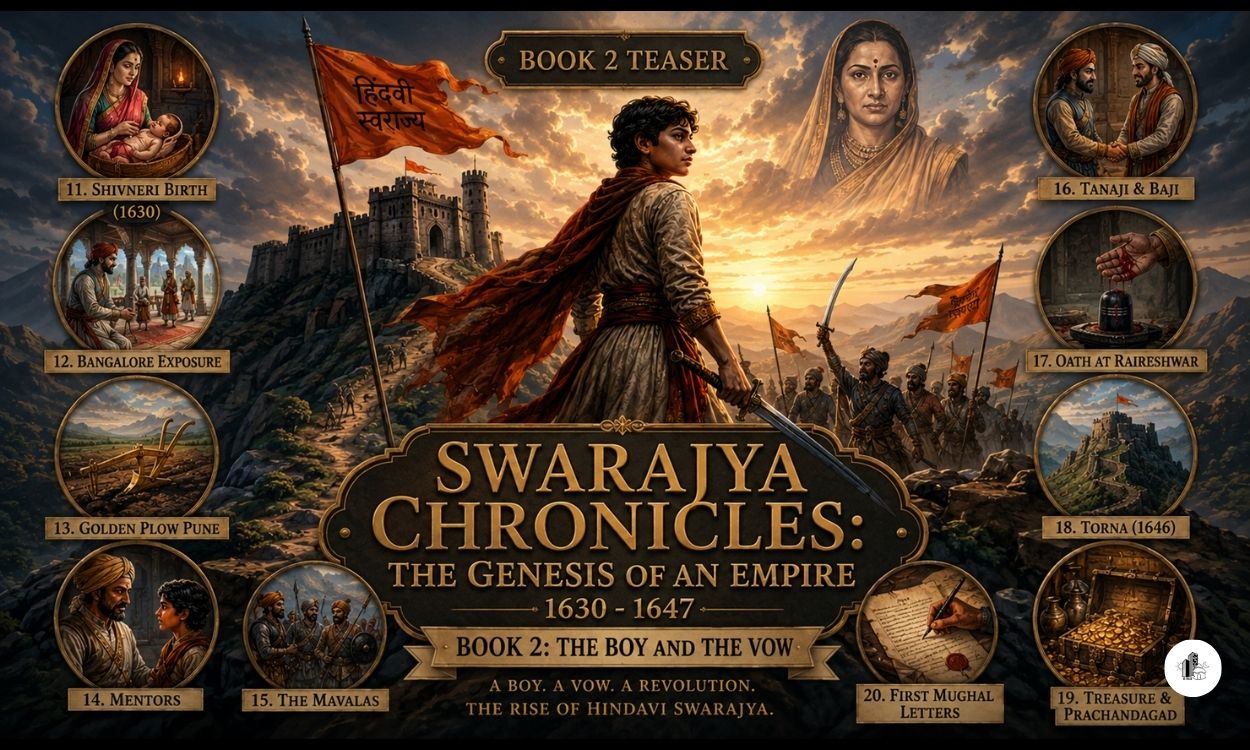
The Swarajya Chronicles: Book 2, Chapter 13
Current Focus: The Boy and the Vow (1630–1647)
Progress: 13 / 100 Chapters Completed….
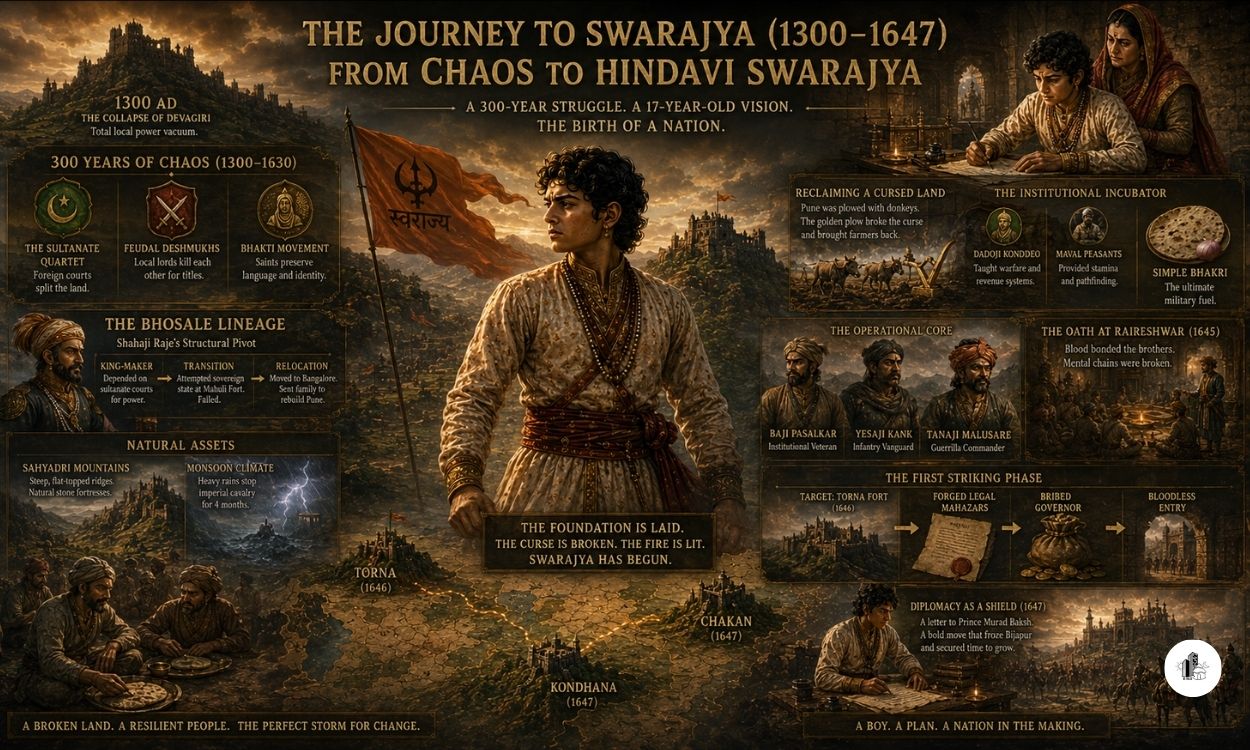
Imagine walking into a valley where the wind smells of ash and the only sound is the howling of wolves. This was the grim reality of Pune in the late 1630s. Today, we know it as a bustling metropolis, a center of education, and a sprawling IT hub. But back then, it was a ghost town. Invading armies had burned the houses to the ground. They tore down temples, destroyed farms, and scattered the population. To make absolutely sure nobody would ever rebuild it, an enemy commander drove a massive iron rod into the soil. He hung a broken earthen pot on it and declared a terrible “curse” upon the land. He claimed that anyone who dared to live there would die a horrible death.
Fear is a powerful weapon. For years, the local farmers refused to touch the soil. But in 1642, a twelve-year-old boy and his visionary mother walked into this ruined valley. They did not run away from the curse. Instead, they answered it with an unforgettable act of defiance. This chapter reveals how Chhatrapati Shivaji Maharaj and Maa Jijau used a symbolic Golden Plow to break a psychological trap, reclaim the soil, and layout the literal first bricks of the Swarajya blueprint.
The Destruction of the Jagir
To understand the genius of what happened next, we must look at why Pune was in ruins. In 1630, a vicious commander named Murar Jagdeo from the Bijapur Sultanate swept through the region. He wanted to punish Shahaji Raje for rebelling against the Sultan.

Murar Jagdeo did not just defeat armies; he destroyed the ecosystem. His soldiers used donkeys to plow the town into dust, which was a deep insult in Indian culture. The iron rod and the broken pot he left behind were symbols of absolute desolation. Nature quickly took over the abandoned town. Dense jungles grew where markets once stood, and wild wolves hunted in the ruined streets. The few human beings left alive were hiding deep in the hills, terrified of both the foreign soldiers and the supernatural curse. The Pune jagir was a worthless piece of real estate on paper.
“Wait, have you read this yet?”
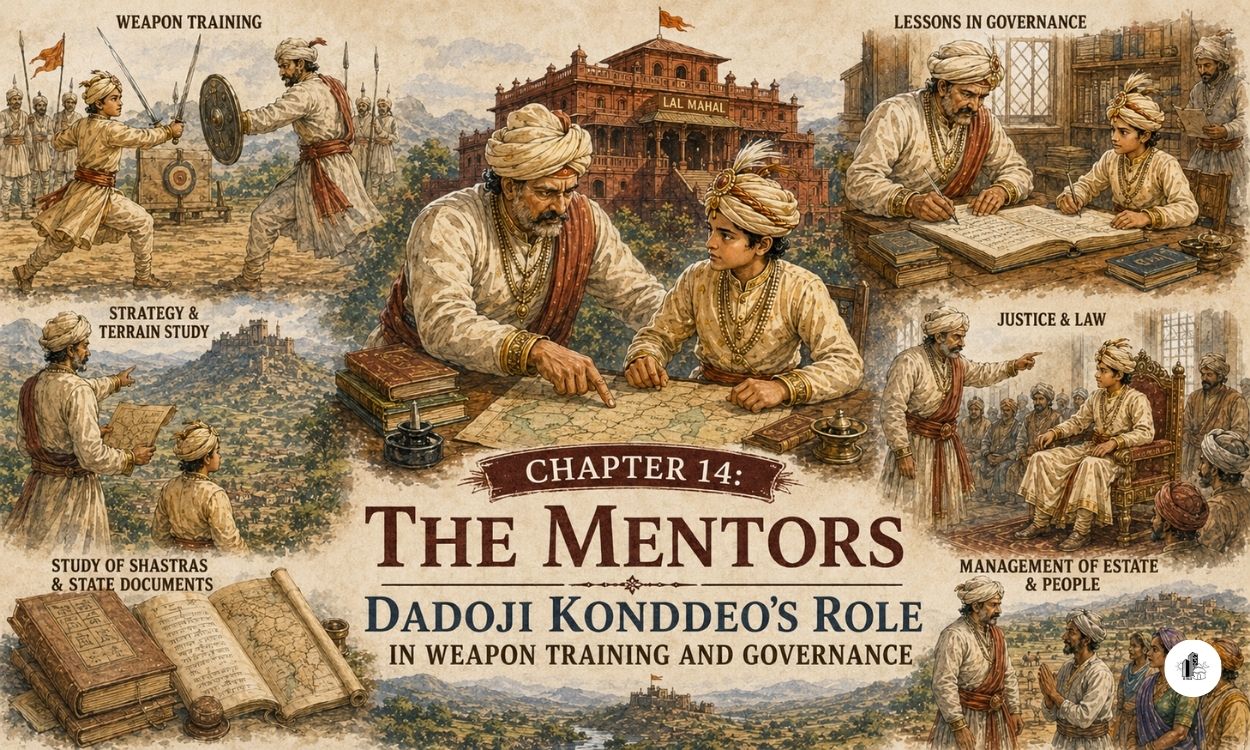
Chapter 14: Chhatrapati Shivaji Maharaj’s Mentor- Dadoji Konddeo
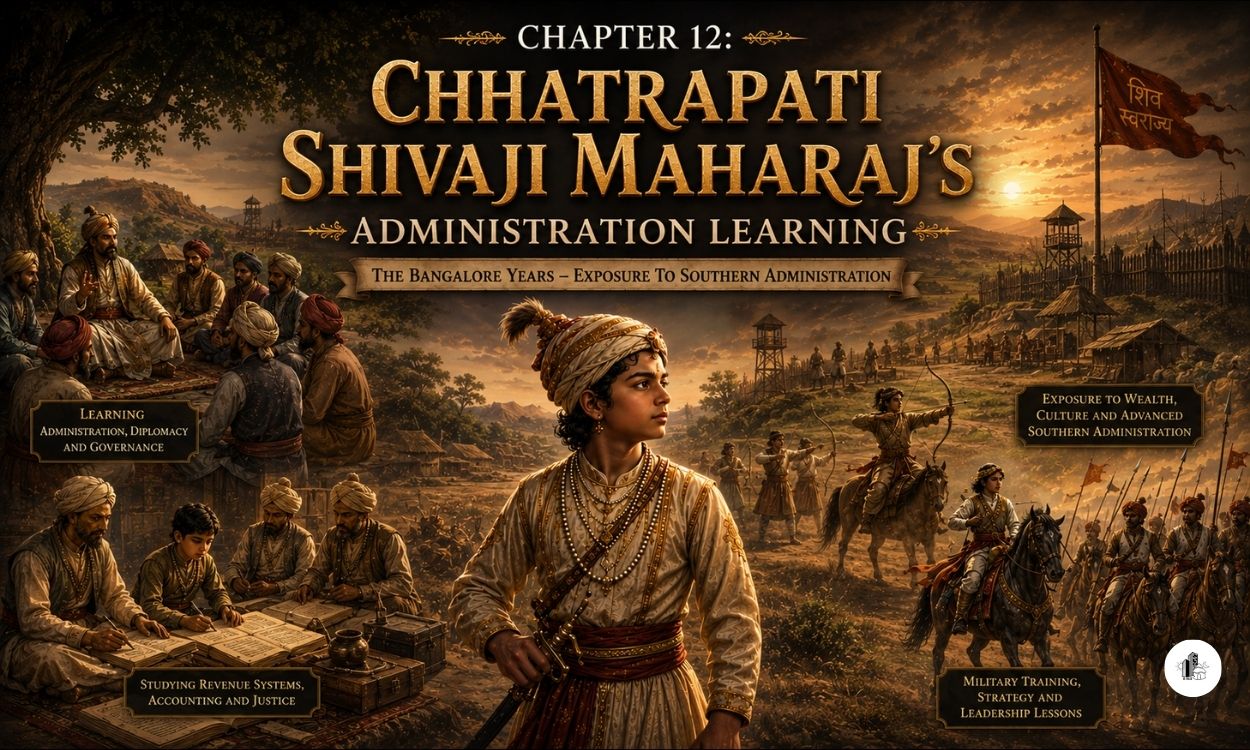
Chapter 12: Chhatrapati Shivaji Maharaj’s Administration Learning
The Psychological Masterstroke: The Golden Plow
When Maa Jijau and the young prince returned from the grand luxury of Bangalore, they faced a major geopolitical shift. They were moving from a safe palace to a dangerous wasteland. A lesser leader might have tried to clear the jungle with fire or build walls immediately. But Maa Jijau understood human psychology. She knew that terrified people cannot build an empire.

She ordered a special tool to be forged: a plow made of sturdy wood, but beautifully covered with pure, shining gold leaf. On a chosen morning, with the local elders watching in disbelief, the young Shivaji Maharaj stepped onto the fields. He gripped the handles of the Golden Plow and drove it deep into the “cursed” earth. This was a brilliant piece of symbolic leadership. By plowing the land with gold, he was signaling that the era of insults and donkeys was over. He was promising that this soil would bring wealth, dignity, and life back to the people. The curse was broken not with magic, but with pure confidence.
Rebuilding the Lal Mahal and the Town
Once the fear evaporated, the people came down from the hills. They realized that this young boy was ready to stand by them. Chhatrapati Shivaji Maharaj did not just clear the fields; he gave the people a physical center of power.
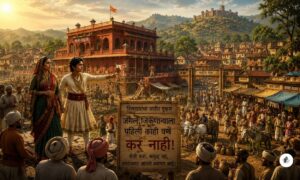
He constructed a simple but dignified residential palace in the heart of the town, named the Lal Mahal (The Red Palace). It was built using local red soil and stone, standing as a direct challenge to the distant sultanates. Next, he set up a secure market area called a Peth. To encourage traders and farmers to return, he announced a brilliant economic policy: any farmer who reclaimed the wild jungle land would pay zero taxes for the first few years. Slowly, the taxes would increase as the farms grew profitable. This fair policy caused a massive wave of migration back into the valley. Within months, the howling of wolves was replaced by the joyful sounds of a thriving market.
Loving this analysis? Let’s stay connected!
Join our WhatsApp & Telegram Channels: Get the latest movie alerts and box office updates directly on your phone. [WhatsApp] & [Telegram]
Follow us on X (Twitter): For quick threads, daily polls, and viral cinema news. [Click Here]
Join our Quora Space: Participate in deep discussions and share your own theories with fellow movie buffs. [Click Here]
Establishing Justice: The Trial of the True King
You cannot build a stable society on good economic policies alone; you need absolute justice. In the 17th century, local landlords called Deshmukhs often fought bloody border wars with each other, terrorizing the poor farmers.
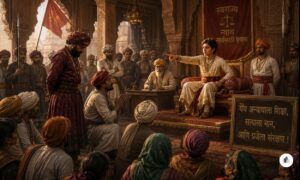
The young Shivaji Maharaj, under the guidance of his tutor Dadoji Konddeo, set up a transparent court at the Lal Mahal. He made it clear that nobody was above the law, no matter how powerful their family name was. When a local tyrant harmed a common peasant, young Shivaji Maharaj delivered immediate, severe punishment. He did not care about political connections. This level of fairness was completely shocking to the people of the Deccan, who were used to corrupt foreign judges. For the first time in generations, the common man felt protected. They realized that this was not just a new landlord; this was a true king who cared for their lives.
Technical Analysis: The Architecture of Rehabilitation
When we analyze the reclamation of Pune from a technical perspective, we see a masterclass in regional development.
-
Psychological Warfare Reversal: He took an enemy symbol of despair (the curse) and completely neutralized it with a powerful indigenous symbol (the golden plow), winning the immediate loyalty of a broken population.
-
Fiscal Stimulus Design: The stepped taxation system for clearing jungles ensured immediate agricultural production without putting financial stress on broken farmers.
-
Strategic Urban Planning: Building the Lal Mahal and creating specialized market zones (Peths) centralized the economy, making it easy to collect revenue and deploy guards.
-
Judicial Standardization: By crushing internal feuds among the Deshmukhs, he unified the local elite under his banner, turning potential internal enemies into external defenders.
The Bones of a Nation
By the time the restoration of Pune was complete, the valley was unrecognizable. The ash was gone, replaced by green fields of grain. The wolves were driven out, replaced by marching soldiers and busy merchants. The young Shivaji Maharaj had taken a cursed graveyard and turned it into the beating heart of a future empire.
He had proven to the people that leadership is not about wearing a crown in a safe palace; it is about standing in the mud with your people and breaking the chains of fear. The foundation stones were now firmly set. The people were fed, the courts were fair, and the treasury was filling up. The Swarajya blueprint was no longer a beautiful dream discussed in secret corners—it had taken deep root in the very soil of Maharashtra.
What Do You Think?
If you were a terrified farmer living in the hills in 1642, would the sight of a young boy with a Golden Plow be enough to make you overcome your fear of a curse? How important is psychological confidence when a leader tries to rebuild a broken organization or nation today? Share your thoughts in the comments below!














Leave a Reply