
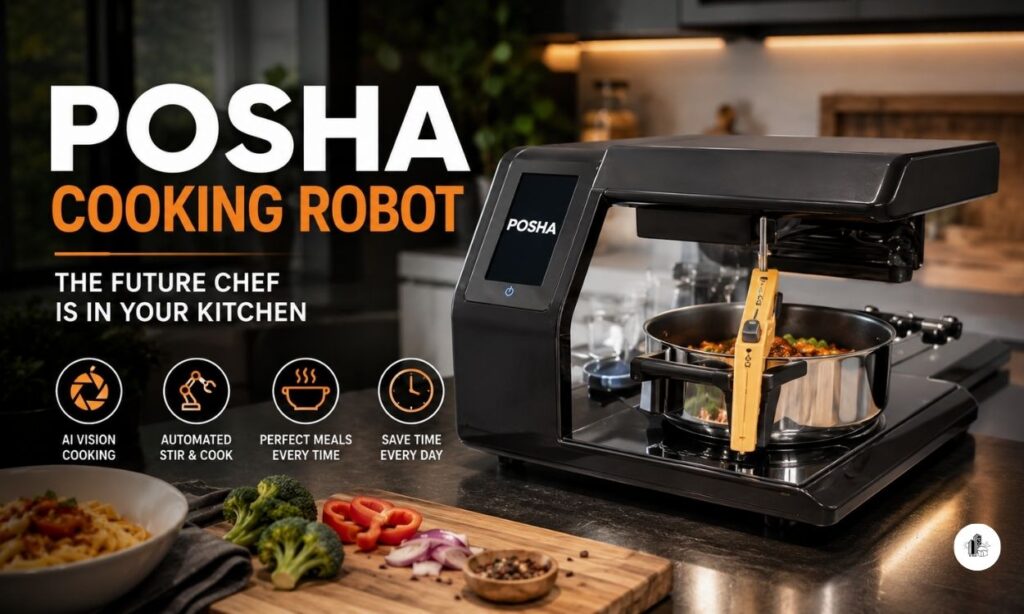
A massive metal arm inside a counter-top machine drops raw chicken into sizzling oil. The machine does not burn the meat because it watches the pan with a high-definition digital eye. This is not a factory floor assembly line. This is the Posha cooking robot (formerly known as Nymble), a twenty-pound box reshaping modern home kitchens.
The average person spends over three hundred hours a year standing directly over a stove. Most of that time involves repetitive stirring, temperature adjustments, and checking for doneness. Posha replaces that entire active cooking phase with automated hardware and real-time computer vision. It functions as a fully contained, robotic private chef that handles the thermal physics of food preparation. It frees you up to do other tasks while your dinner cooks perfectly.
Inside the Core Hardware Architecture
The Posha robot takes up roughly the same counter footprint as a large microwave or a premium espresso unit. Its body houses an array of smart components designed to manage raw ingredients safely.
The Multi-Compartment Dispensing System
The top layout of the machine features four main physical compartments. These sections handle the heavy lifting of ingredient management.
The Main Pods: Four separate, removable food bins hold your chopped meats, vegetables, and pre-soaked grains.
The Spice Module: A dedicated internal rack stores six individual dry spices. It drops them in precise milligram measurements.
Liquid Micro-Pumps: Built-in hidden tanks store water, cooking oil, and thin sauces. They spray them directly onto the pan base.
Magnetic Stirring Spatulas: The unit uses interchangeable magnetic stirring arms. They mix noodles, toss rice, or flip delicate items based on the recipe file.
“Wait, have you read this yet?”
The Digital Brain: Real-Time Computer Vision
Most basic kitchen appliances rely on simple timers. If a microwave runs for five minutes, it stops regardless of how your food actually looks. Posha operates on a completely different technological level.
Dynamic Thermal Tracking
An overhead thermal camera works alongside an optical lens inside the lid structure. This visual array monitors your food constantly as the induction base heats the pan.
The internal AI system scans the changing surface textures of your ingredients. It tracks the exact translucent color shift of browning onions. It measures the precise volume shrinkage of cooking mushrooms.
“If your chopped vegetables have a higher moisture content than the standard test recipe, the robot instantly reacts. It extends the sauté time and raises the induction heat automatically.”
What Can This Machine Actually Cook?
The cooking chamber uses a custom-engineered induction heating base. This allows it to change temperatures rapidly from a low simmer to a high-heat sear.
Automated Recipe Performance
| Food Category | Mechanical Action | Final Culinary Result |
| Italian Pastas | Pumps water, boils noodles, drops cheese, and stirs gently. | Creamy, consistent Alfredo without split sauces. |
| Asian Stir-Fries | Employs high-heat induction and rapid magnetic flipping. | Crisp vegetables with authentic seared edges. |
| Indian Curries | Simmers ingredients slowly and dispenses spices sequentially. | Deeply developed flavors with fully emulsified gravies. |
| Breakfast Scrambles | Lowers the heat base and whisks eggs continuously. | Soft, fluffy curries and scrambled eggs that stay moist. |
The mobile app interface allows you to change recipes to fit your diet. You can slide a digital scale to drop the oil content by fifty percent. You can also lock out specific spices if you prefer milder food.
Addressing the Ultimate Bottleneck: The Prep Work
The biggest misunderstanding about kitchen robotics involves the concept of total automation. Posha is a highly advanced automated cooking station, but it is not a humanoid maid.
The Human Preparation Requirements
The robot cannot open a plastic bag of chicken. It cannot peel a potato, wash dirt off spinach, or slice an onion. You must perform all the basic prep work yourself. You have to chop the ingredients to fit the size constraints of the top loading bins.
Once your items are chopped and loaded into their matching pods, you can finally walk away. The machine handles the entire active cooking cycle without your help. It keeps your kitchen counters clear of grease splatters. It also eliminates the risk of boiling over or scorching your pans.
Loving this analysis? Let’s stay connected!
Join our WhatsApp & Telegram Channels: Get the latest movie alerts and box office updates directly on your phone. [WhatsApp] & [Telegram]
Follow us on X (Twitter): For quick threads, daily polls, and viral cinema news. [Click Here]
Join our Quora Space: Participate in deep discussions and share your own theories with fellow movie buffs. [Click Here]
Maintenance, Cleaning, and Everyday Value
A kitchen gadget is useless if cleaning it takes longer than cooking the actual meal. The designers built the Posha robot with a strong focus on easy maintenance.
Dishwasher-Safe Component Engineering
Every single part that touches raw or cooked food detaches from the main body instantly. The main induction pan, the magnetic stirring spatulas, and the four top ingredient pods slide out easily. They are built from high-grade materials that can go straight into a standard dishwasher cycle.
The main chassis only requires a quick wipe down with a damp cloth after use. The sealed design prevents steam or oil from getting inside the internal circuit boards. This ensures the tech stays safe and functions smoothly over years of daily kitchen use.
The Financial Investment
The Posha cooking robot is a premium appliance priced around $1,500 USD. This upfront cost targets a specific audience. It is built for busy professionals, tech enthusiasts, and people who want fresh home-cooked meals but lack the time to stand over a stove.
This bridges the gap between expensive daily food deliveries and time-consuming manual cooking. It delivers consistent, healthy, and highly automated meals straight to your dinner table.
What Do You Think?
Would you trust a robotic arm and an AI camera to cook your daily dinner, or do you find the process of manual stirring therapeutic? Does the requirement of chopping your own vegetables make kitchen robots less appealing to you?