

A Note from the Author
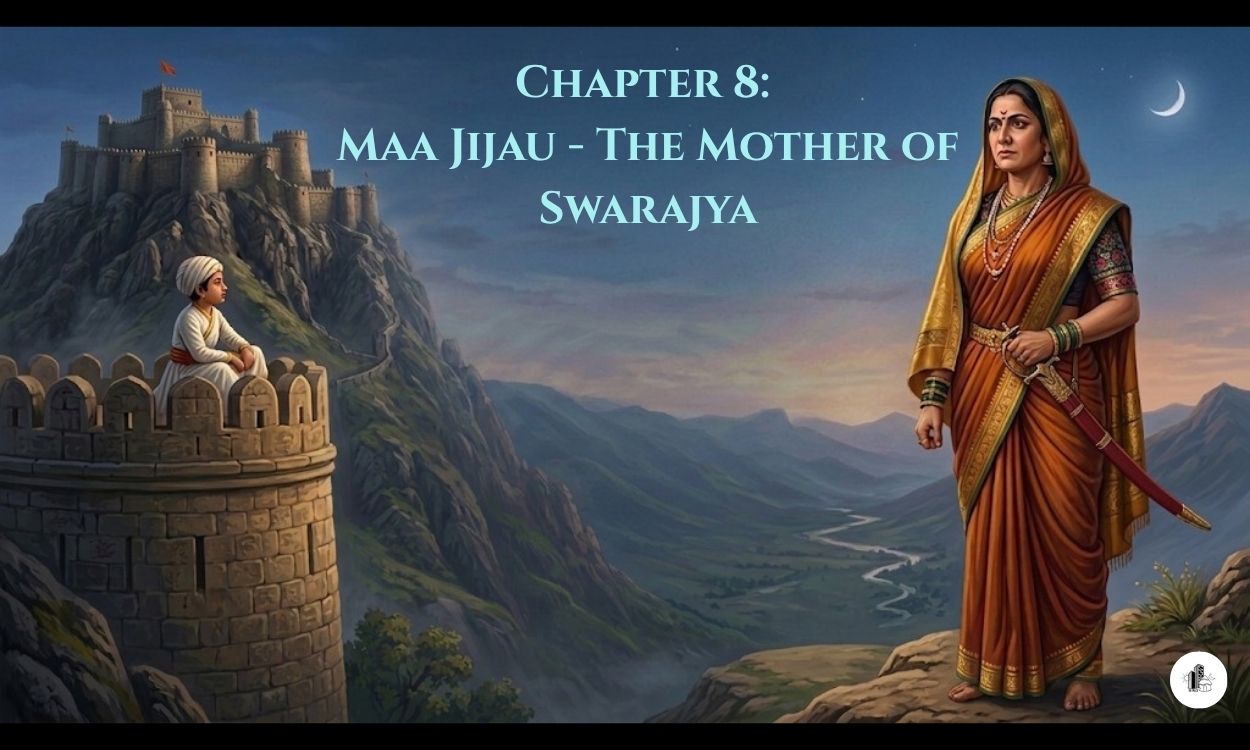
Before we step into the ruins of Pune and the corridors of Sindkhed Raja, I want to speak to you about the woman who serves as the heartbeat of this entire chronicle. In these pages, and in all the stories yet to come, we will not refer to her merely by her name. To us, she is Maa Jijau.
This title is more than a mark of respect; it is an acknowledgement that she was the mother not just to a King, but to the very idea of freedom itself. By calling her Maa Jijau, we honor the architect whose wisdom and resilience built the moral foundation upon which the Maratha Empire was raised.
The Swarajya Chronicles: Book 1, Chapter 8
Current Focus: The Pre-Swarajya Landscape (1300–1630)
Progress: 08 / 100 Chapters Completed….
Behind every great leader, a powerful force usually shapes their very soul. For the Maratha Empire, that force was a woman of incredible strength named Jijabai, or Maa Jijau. Many people see her only as a mother, but she was a true visionary. She acted as a skilled administrator and a fierce protector of her culture.
Maa Jijau was born into the grand house of the Jadhavas of Sindkhed Raja. Her father, Lakhuji Jadhav, was a powerful noble. Growing up, she did not just learn household chores. She watched how kingdoms were run and how battles were fought. This upbringing turned her into a woman who could think like a king. She possessed the Swarajya blueprint long before it became a reality.
A Childhood Among Warriors and the Geopolitical Shift
Maa Jijau was born into luxury, but her life was never soft. Her family was famous for their bravery and military skill. From a young age, she learned how to ride horses and handle weapons. Maa Jijau watched the men in her family deal with the complex geopolitical shift of the Deccan. This was a time when the Mughal Empire was slowly moving south, and local kingdoms were constantly in flux.
However, she also saw the deep pain of her people. The Deccan was constantly under the boots of foreign invaders. She noticed how local Maratha nobles often fought each other instead of uniting against a common enemy. These observations stayed with her for years. They planted the seeds for a land where her people could live with dignity and pride. She realized early on that without unity, there could be no true freedom.
The Union of Two Great Houses: Jadhav and Bhosale
When Maa Jijau married Shahaji Raje Bhosale, it was a union of two powerful families. This marriage brought her into the heart of the political struggle. She moved from the Jadhavas to the Bhosales, but her spirit remained independent. She was not just a wife; she was a partner in a dangerous world of shifting loyalties.
Life as the wife of a warrior like Shahaji Raje was quite difficult. He was constantly away on military campaigns, serving different sultans to maintain his influence. Maa Jijau often had to manage estates and handle local issues on her own. This period taught her how to be a leader in her own right. She learned to balance the harsh realities of war with the needs of the common people. She saw firsthand how war destroyed families and lands, making her crave a lasting peace under home rule.
“Wait, have you read this yet?“
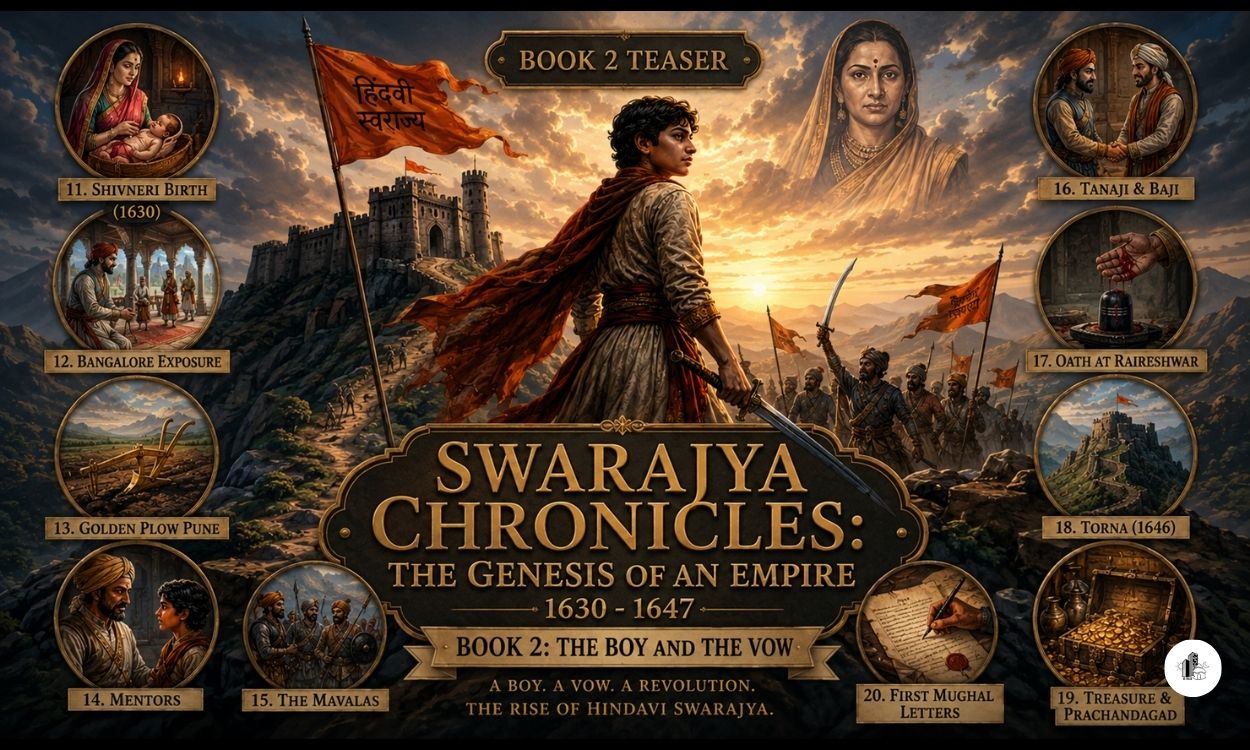
Chapter 9: Geography as a Weapon- The Secrets of the Sahyadri Mountains
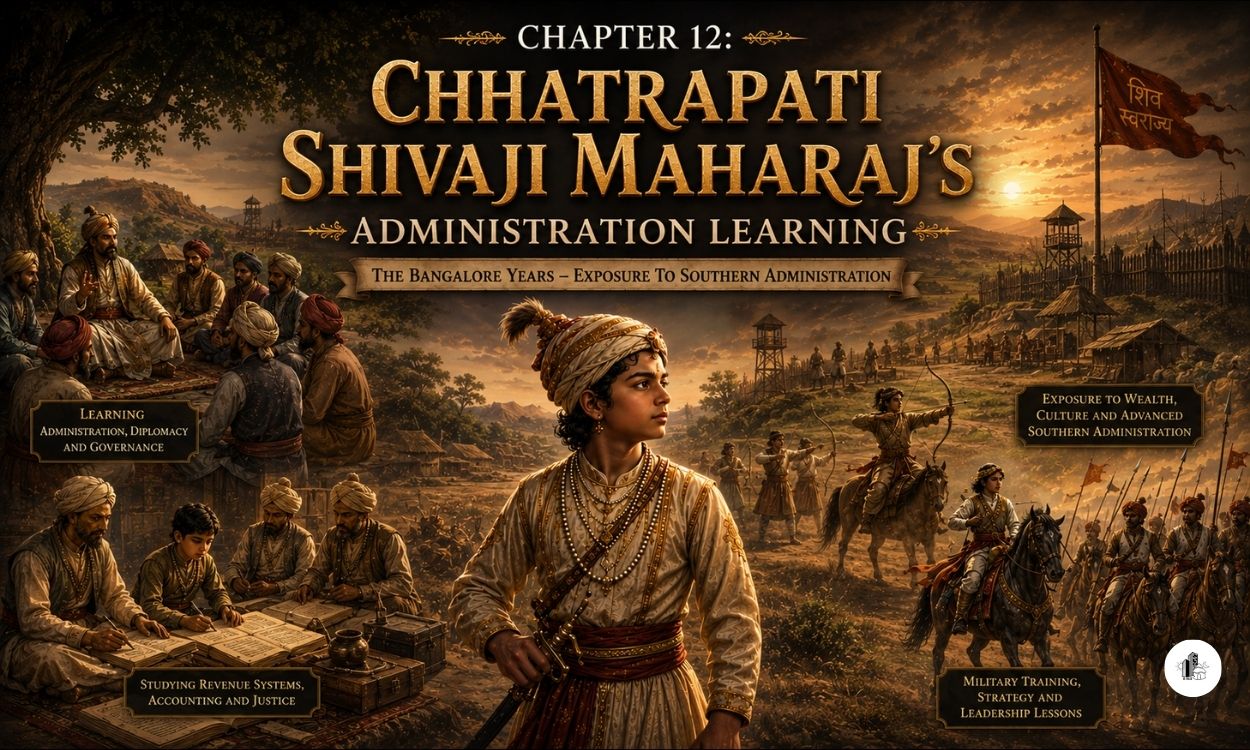
Chapter 7: Shahaji Raje (Part II) – The Mahuli struggle and move to Bangalore.
The Miracle at Fort Shivneri and a Mother’s Prayer
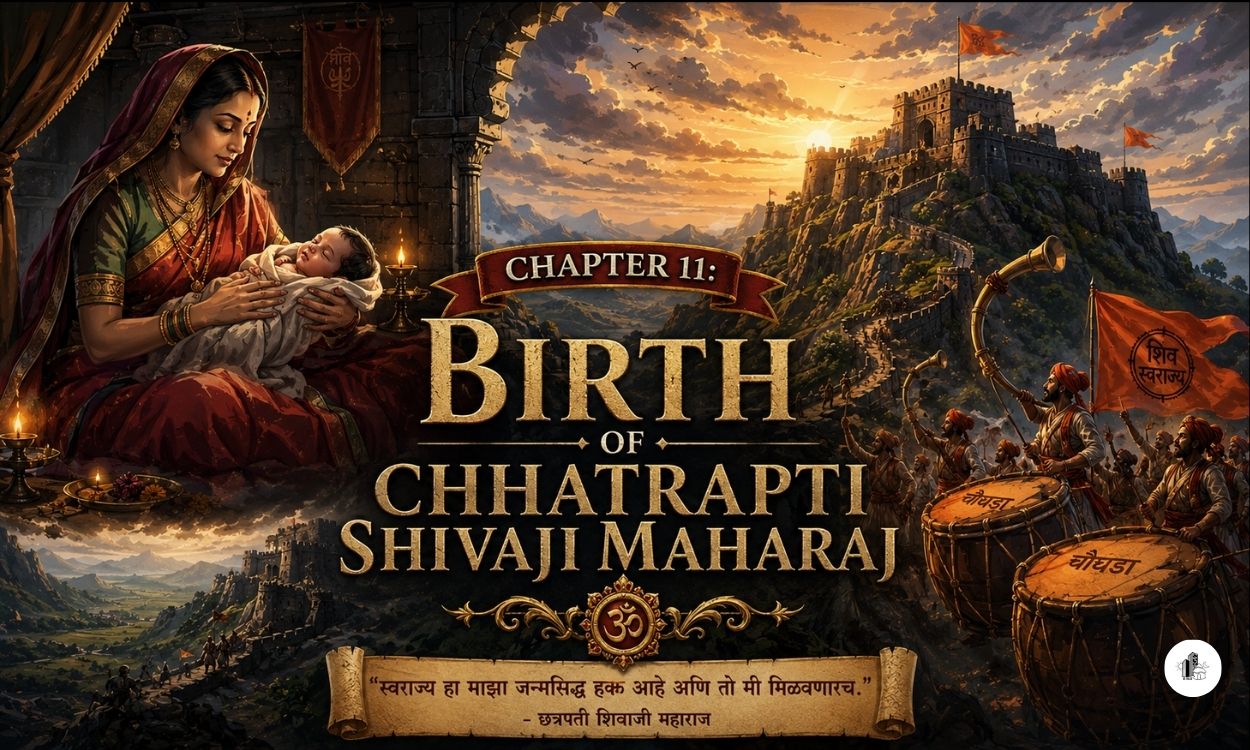
The birth of her son, Shivaji Maharaj, took place at Fort Shivneri in 1630. This was a time of great danger and uncertainty. The Mughal and Adilshahi forces were hunting her husband. Even while pregnant, Maa Jijau showed immense courage by staying in a fort surrounded by enemies.
She prayed to Goddess Shivai for a son who would bring freedom to the land. When Shivaji Maharaj was born, she did not just see a baby; she saw the future of a nation. She dedicated her life to ensuring he had the mind and heart to lead. She knew that for him to succeed where others failed, he needed more than just strength; he needed a clear vision and a moral compass.
The Strategic Education of a Young Prince
Maa Jijau was the primary influence on young Shivaji Maharaj’s life. While Shahaji Raje was busy in the South, she stayed in Pune. She did not just tell Shivaji Maharaj bedtime stories, but shared stories from the Ramayana and the Mahabharata.
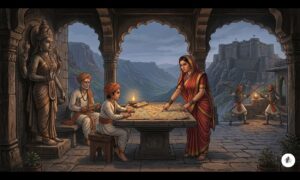
Maa Jijau used these epics to teach Shivaji Maharaj about justice, duty, and sacrifice. She made sure he understood that a king’s duty is to protect the weak and the righteous. Maa Jijau also taught him about the history of their own land, explaining how it had been taken from them. She wanted him to feel the weight of his heritage and the urgency of their cause. Maa Jijau was crafting a leader who would fight not for land, but for people.
Rebuilding Pune: From Ruins to a Rising Power
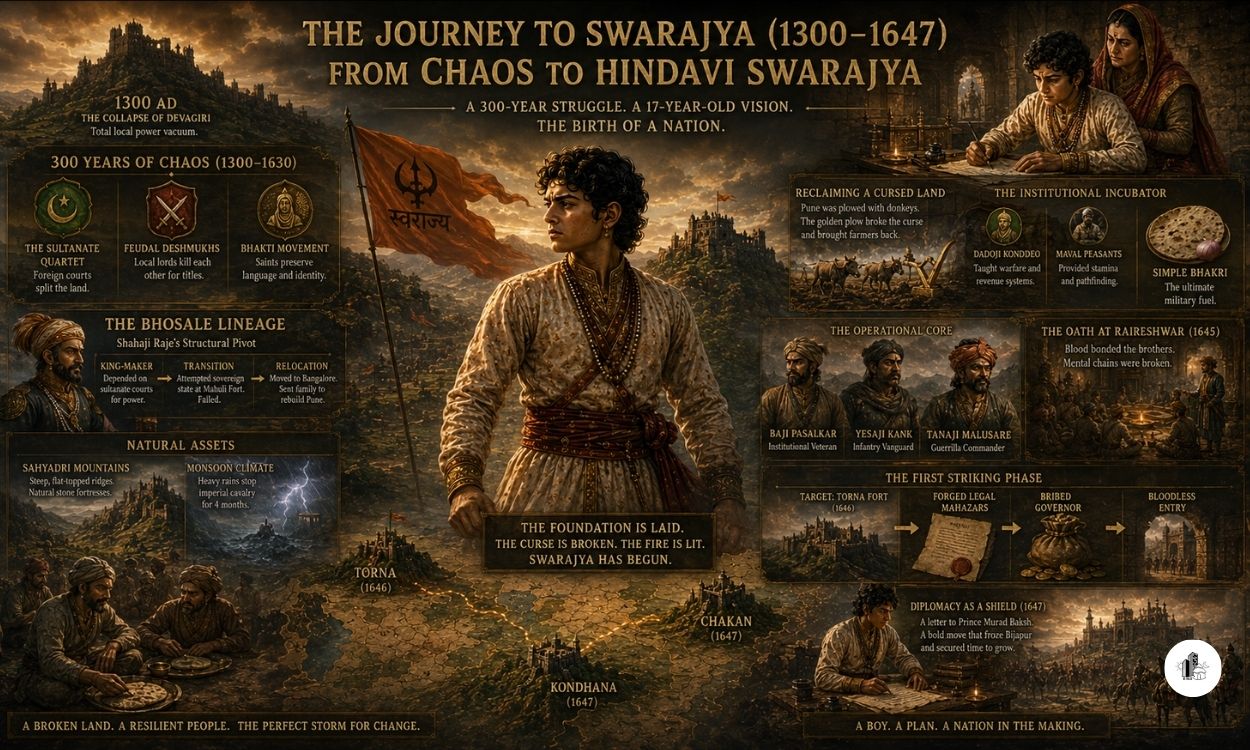
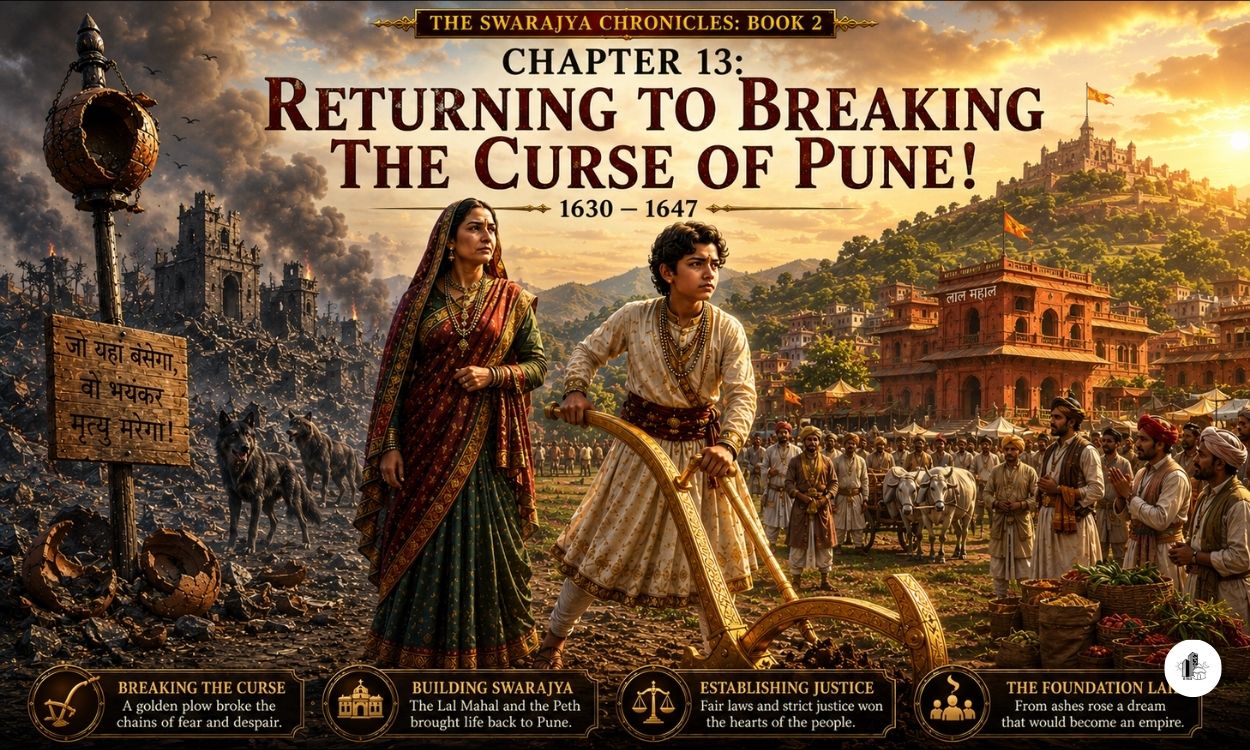
When Maa Jijau and Shivaji Maharaj arrived in Pune, the city was in ruins. It was said that the land was cursed by the Adilshahi and people were afraid to live there. Maa Jijau did something remarkable to break this fear. She took a golden plow and personally started plowing the land.
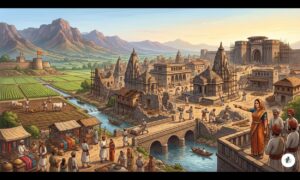
This act served as a powerful symbol of hope and rebirth. She encouraged farmers to return by offering them tax breaks and safety. She rebuilt temples and established order in the chaos. Under her guidance, Pune grew from a ghost town into a thriving center of the Maratha spirit. This was Shivaji Maharaj’s first real lesson in rebuilding a nation from the ground up. He learned that a ruler must first build the trust of his people before he can lead them to war.
Strategic Analysis: The Intellectual Foundation of Swarajya
Why does Maa Jijau stand out in history? It is because she dared to dream of freedom when everyone else had accepted slavery. Her influence transformed Shivaji Maharaj from a local noble into a legendary king. She provided the intellectual and moral foundation upon which the entire empire was built.
She did not just give him life; she gave him a purpose. Her teachings created a ruler who was both feared by his enemies and loved by his subjects. Many of the core values of the Maratha administration – like the protection of women and religious tolerance—were actually Maa Jijau’s own beliefs put into practice. She proved that the hand that rocks the cradle can indeed shape the history of a world. Her foresight allowed Shivaji Maharaj to navigate the complex politics of the Mughals and the Sultanates with wisdom far beyond his years.
The Silent Guardian of the Movement
Even as Shivaji Maharaj grew older and began capturing forts, Maa Jijau remained his closest advisor. When he was away at war, she managed the administration of the growing kingdom. She was the one who kept the morale of the people high during the darkest hours. When Shivaji Maharaj was trapped in Agra, it was Maa Jijau who kept the administration running without a single mistake.
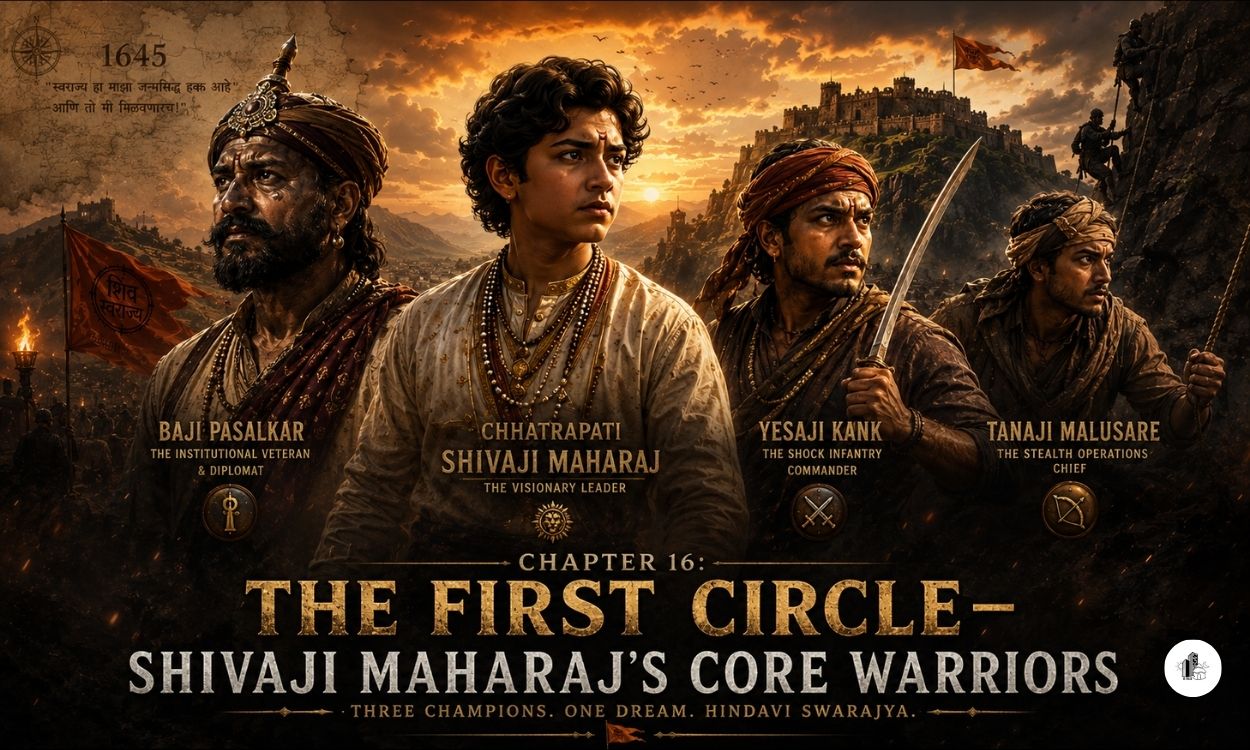
Maa Jijau had a keen eye for character. She helped Shivaji Maharaj identify men of honor like Tanaji Malusare and Baji Prabhu Deshpande. Maa Jijau understood that a king is only as good as the men who serve him. She treated these warriors like her own sons, creating a bond of loyalty that was stronger than gold. This emotional and strategic support was the backbone of the early Swarajya movement.
Loving this analysis? Let’s stay connected!
Join our WhatsApp & Telegram Channels: Get the latest movie alerts and box office updates directly on your phone. [WhatsApp] & [Telegram]
Follow us on X (Twitter): For quick threads, daily polls, and viral cinema news. [Click Here]
Join our Quora Space: Participate in deep discussions and share your own theories with fellow movie buffs. [Click Here]
Conclusion: A Legacy of Strength and Sovereignty
Maa Jijau lived to see her son crowned as the Chhatrapati in 1674. It was the ultimate fulfillment of her lifelong dream. She saw the dream of Hindavi Swarajya finally take a physical form. She passed away shortly after the coronation, knowing her mission was complete and the seeds she planted had grown into a mighty oak.
Today, she is remembered as the mother of the nation. Her life is a lesson in resilience, intelligence, and unwavering love for one’s land. She remains an inspiration for anyone who believes that a single person can change the course of history through wisdom and courage. She was not just a historical figure; she was the soul of an empire that would change India forever.
What Do You Think?
Maa Jijau played many roles – daughter, wife, mother, and leader. Which of her qualities do you find most inspiring for leaders today? Was her role in rebuilding Pune her most important achievement, or was it her role as Shivaji Maharaj’s teacher? Do you think the Maratha Empire could have existed without her vision?







Leave a Reply