

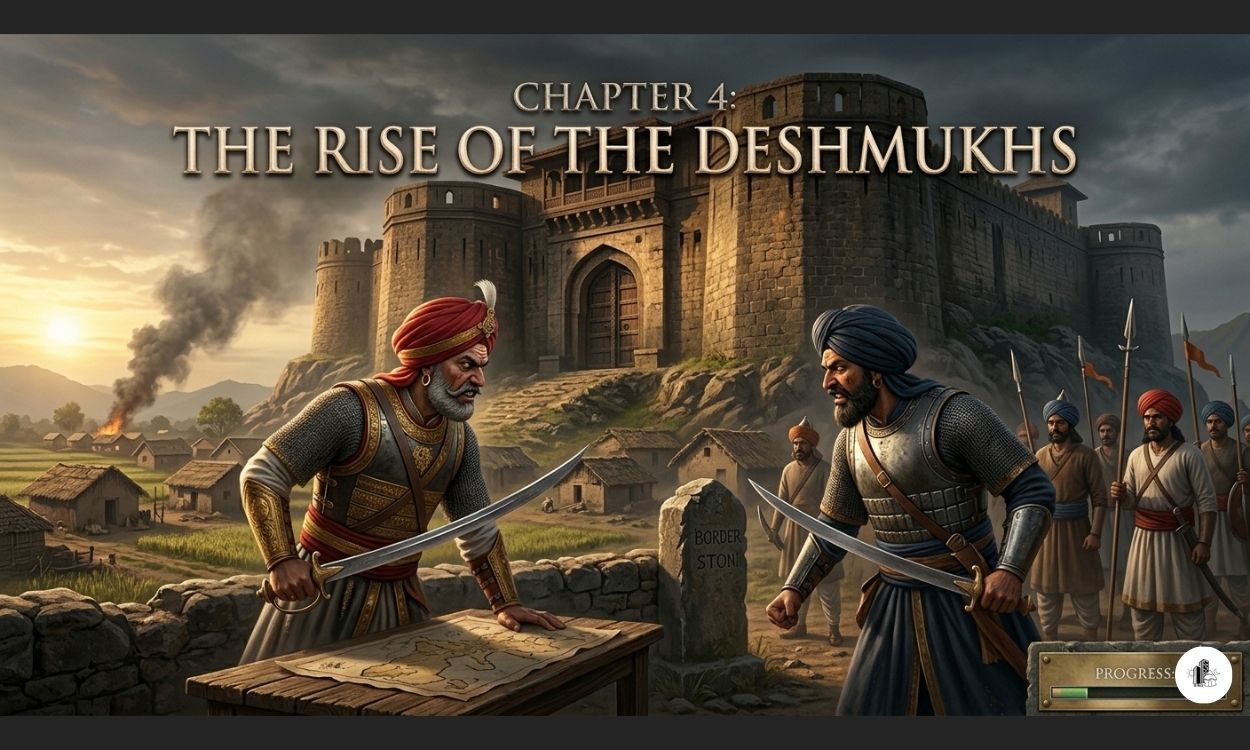
The Swarajya Chronicles: Book 1, Chapter 4
Current Focus: The Pre-Swarajya Landscape (1300–1630)
Progress: 04 / 100 Chapters Completed….
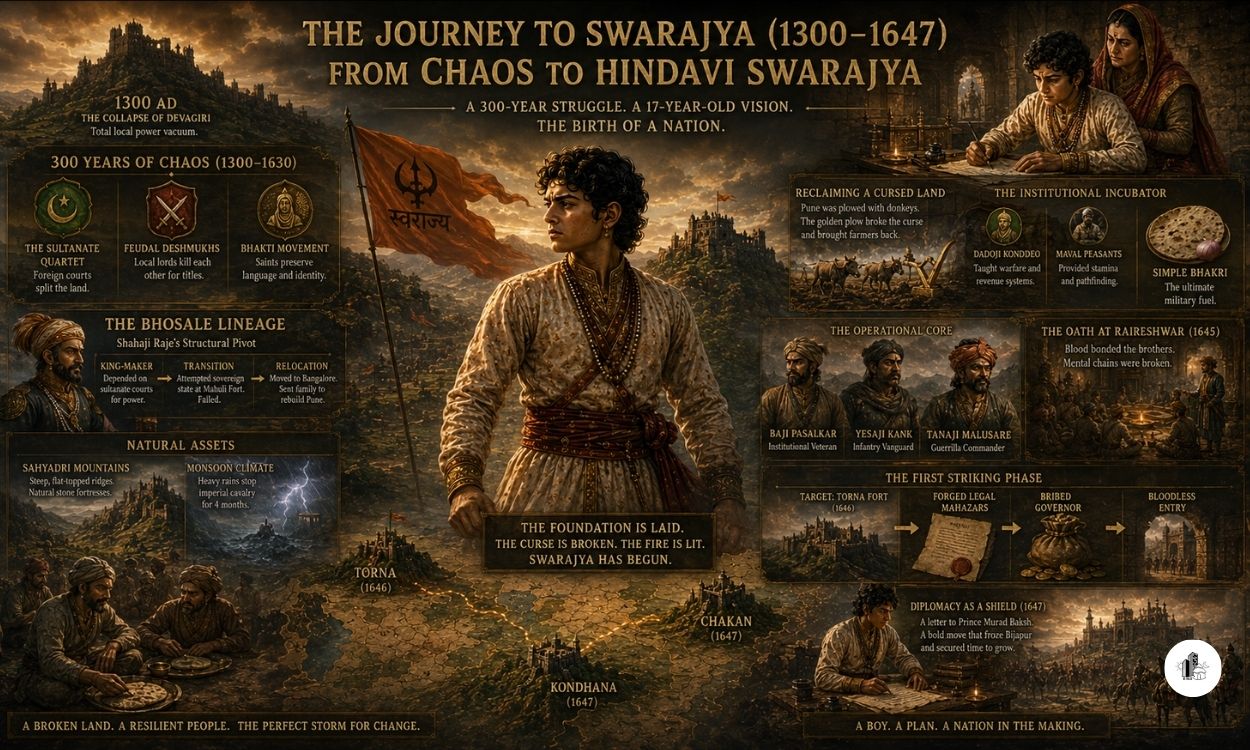
Imagine you live in a small village 400 years ago. You do not look toward a distant King in a palace for help. Instead, you look toward the big stone house on the hill. The man inside that house owns the land, the water, and even your safety. He is your protector, but he can also be your biggest nightmare. This was the world of the Deshmukhs. In the time before Swarajya, these local landlords were the real kings of the soil. They held the keys to the Deccan. However, they were also trapped in a cycle of blood and ego that kept the land in total chaos. This is the forensic truth of the feudal system that Shivaji Maharaj had to dismantle to build a nation.
The Anatomy of a Landlord: Who was a Deshmukh?
To understand the Deshmukh, you must understand the word Watan. A Watan was a legal right to a piece of land and its income. The Sultanates did not have enough officials to manage every village. So, they made a deal with powerful local families.
The Deal: The Sultan gave the family the title of “Deshmukh.”
The Duty: The Deshmukh collected taxes from the farmers and kept the peace.
The Reward: He kept a share of the tax and lived like a local prince.
These families were the “middlemen” of history. They knew every farm, every well, and every family in their district (Pargana). They were the iron grip of the Sultanate on the local people. Without the Deshmukhs, the Sultans in Bijapur or Ahmednagar could not have ruled for even a single day.
The “Wada”: A Fortress of Local Power
The Deshmukh did not live in a simple house. He lived in a Wada. This was a massive, fortified mansion with thick stone walls and heavy wooden gates. It was a mini-fortress. Inside the Wada, the Deshmukh held his own court, settled disputes between villagers, punished criminals, even kept his own small army of soldiers.
Each Wada was a center of power. It was a symbol of “I am the boss of this land.” But these Wadas also became symbols of pride and stubbornness. A Deshmukh would die before letting a rival landlord touch even an inch of his boundary.
“Wait, have you read this yet?“
Chapter 5: The Bhosale Lineage – From Verul to the Service of the Sultans
Chapter 3: The Bhakti Movement – The Invisible Fort that Saved a Nation
The Chaos of the “Bhaubandki” (Family Feuds)
While the Deshmukhs were powerful, they were also their own worst enemies. This is a “minor detail” that textbooks often ignore. The right to be a Deshmukh was hereditary. This means it passed from father to son.
Over generations, families grew larger. Soon, five cousins would all claim the same title. This led to a deadly disease called Bhaubandki (brother-fighting-brother).
-
They fought over who would sit on the main chair during a festival.
-
They fought over whose name appeared first in a legal document.
-
They burned each other’s crops and killed each other’s cattle.
The Sultans loved this chaos. As long as the Maratha landlords were killing each other over “Haq” (rights), they would never unite against the foreign kings. The Deccan was a mess of small wars between neighboring Wadas.
The Economic Trap: How the Farmer Paid the Price
We must look at the “forensic economics” of this system. The Sultan wanted his fixed tax. The Deshmukh wanted his luxury. Who paid for it? The poor farmer (Ryot).
If there was a famine, the Sultan rarely gave a discount. If the Deshmukh needed money for a daughter’s wedding, he taxed the farmer more. The farmers were treated like property. If a Deshmukh lost a war to a neighbor, the new landlord would often burn the villages of the old one. The people lived in constant fear. They had no one to complain to because the judge (the Deshmukh) was often the oppressor.
The Private Armies: Shiledars and Paiks
Every Deshmukh maintained a private militia. These were not state soldiers. They were loyal only to the landlord.
The Shiledar: These were horsemen who brought their own weapons and horses.
The Paiks: These were infantrymen, usually local farmers who fought during the off-season.
These militias made the Deshmukhs very dangerous. If a Sultan tried to remove a Deshmukh, the landlord would simply hide in the hills and start a guerrilla war. This made the Deshmukhs “untouchable” in their own regions. The Sultans realized it was easier to keep them happy than to fight them.
The Famous Names: The Power Players of the 1600s
To make our master file complete, we must name the families who ruled the landscape. Before the rise of the Bhonsles, names like Jedhe, More, Nimbalkar, Shirke, and Sawant were the titans of the Deccan.
-
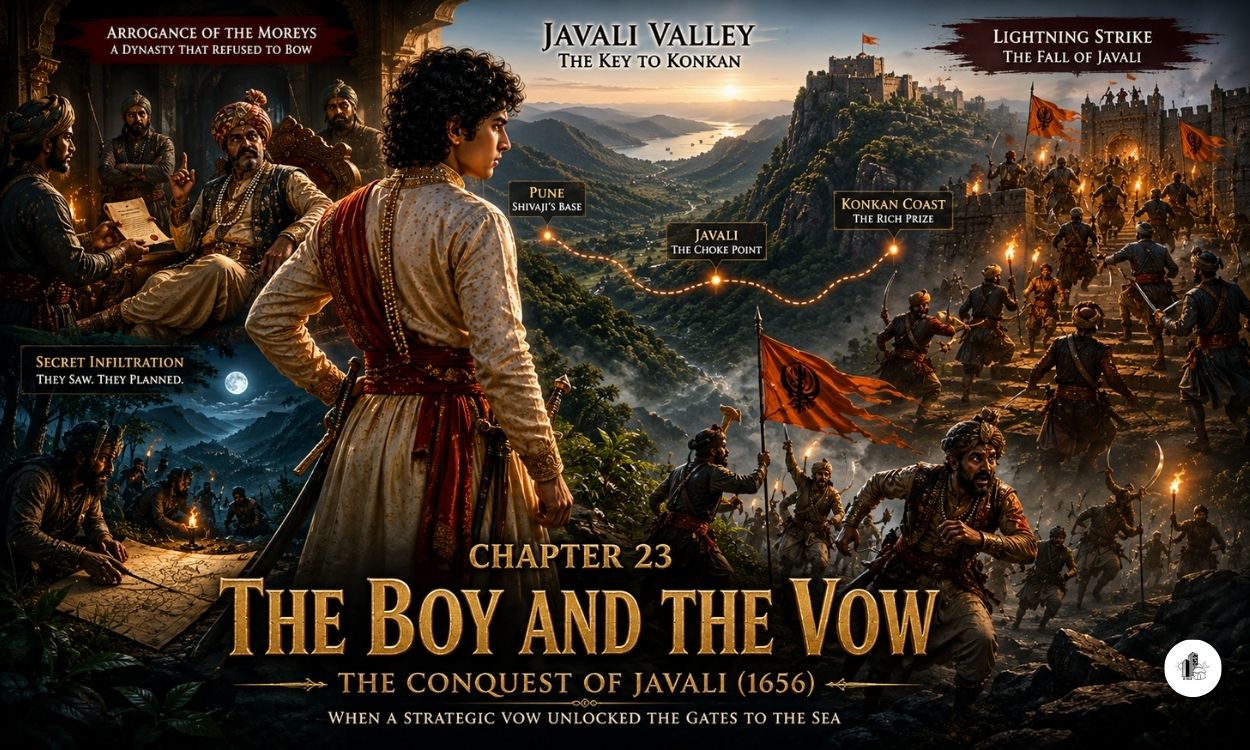
The Mores of Javali ruled the thick forests near Mahabaleshwar. They were so powerful that even the Sultan of Bijapur called them “Raja.”
-
The Nimbalkars of Phaltan had a massive influence on the plains.
These families had been landlords for centuries. They had deep roots. To them, a young Shivaji was just another son of a fellow landlord. They did not want a “King” over them. They wanted to remain the kings of their own small districts.
How the System Chained the Land
This feudal structure was like a spider web. Every thread was a Deshmukh family.
-
No Unity: Every landlord cared only for his own Wada.
-
Brain Drain: The best Maratha warriors were busy fighting their own cousins.
-
Stagnation: There was no common law or progress. Only tax and tradition.
This was the “Landscape of Chaos” that Book 1 describes. It was a land of brave men with no common goal. They were lions fighting over a piece of meat while the Sultan held the leash.
The Turning Point: Shivaji’s Greatest Challenge
Many people think Chhatrapati Shivaji Maharaj’s biggest enemies were the Sultans or the Mughals. That is not entirely true. His hardest job was convincing these stubborn Deshmukhs to stop fighting each other. Maharaj had to prove that being a servant of a foreign king was a shame. He had to replace their “Watan-Pride” with “Nation-Pride.”
Chhatrapati Shivaji Maharaj did not just win them over with words. Maharaj had to use the sword against some, and marriage alliances with others. He had to show them that a Rayat-centric (people-first) kingdom was better than a selfish landlord system.
Loving this analysis? Let’s stay connected!
Join our WhatsApp & Telegram Channels: Get the latest movie alerts and box office updates directly on your phone. [WhatsApp] & [Telegram]
Follow us on X (Twitter): For quick threads, daily polls, and viral cinema news. [Click Here]
Join our Quora Space: Participate in deep discussions and share your own theories with fellow movie buffs. [Click Here]
What Do You Think?
We see this even today in some parts of the world. Powerful local leaders care more about their own influence than the country’s progress.
-
Do you think the Deshmukhs were “villains,” or were they just products of a broken system?
-
If you were a farmer back then, would you have supported the local Deshmukh or a new rebel king?
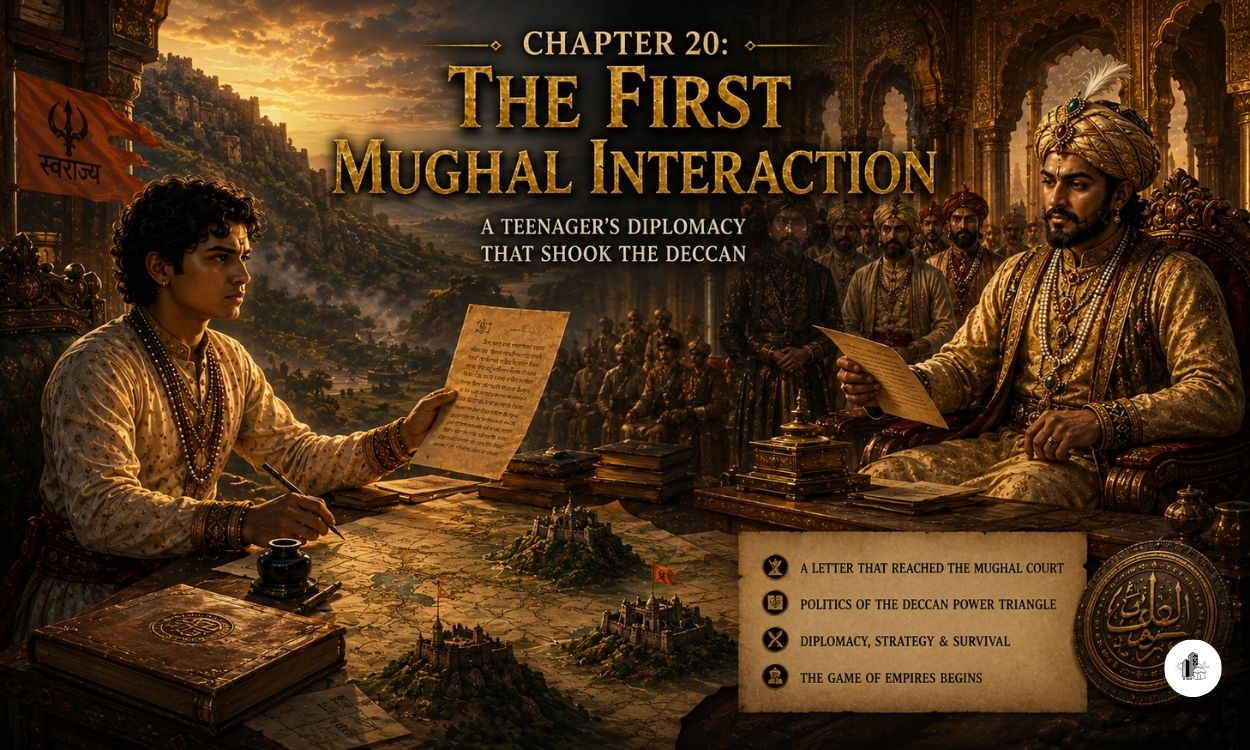
In our next chapter, we move from the local landlords to the global giants. The Mughal Shadow is stretching from Delhi. The stage is set for the ultimate clash of civilizations.
The Mahagranth continues…




Leave a Reply